 GymDroid
Dumbbell fly from every angle
Dumbbell Fly: How to Do It Right
The dumbbell fly is a chest isolation exercise.
- Works
- Lower chest, Upper chest
- Also works
- Biceps, Front deltoids
How to do a dumbbell fly, step by step
- Sit on the end of the bench with the dumbbells on your thighs. Lie back and bring them up over your chest.
- Plant your feet on the floor. Keep your head, shoulders and glutes on the bench.
- Hold the dumbbells over your chest, palms facing each other. Keep a soft bend in your elbows.
- Pull your shoulder blades back and down into the bench. Lift your chest a little.
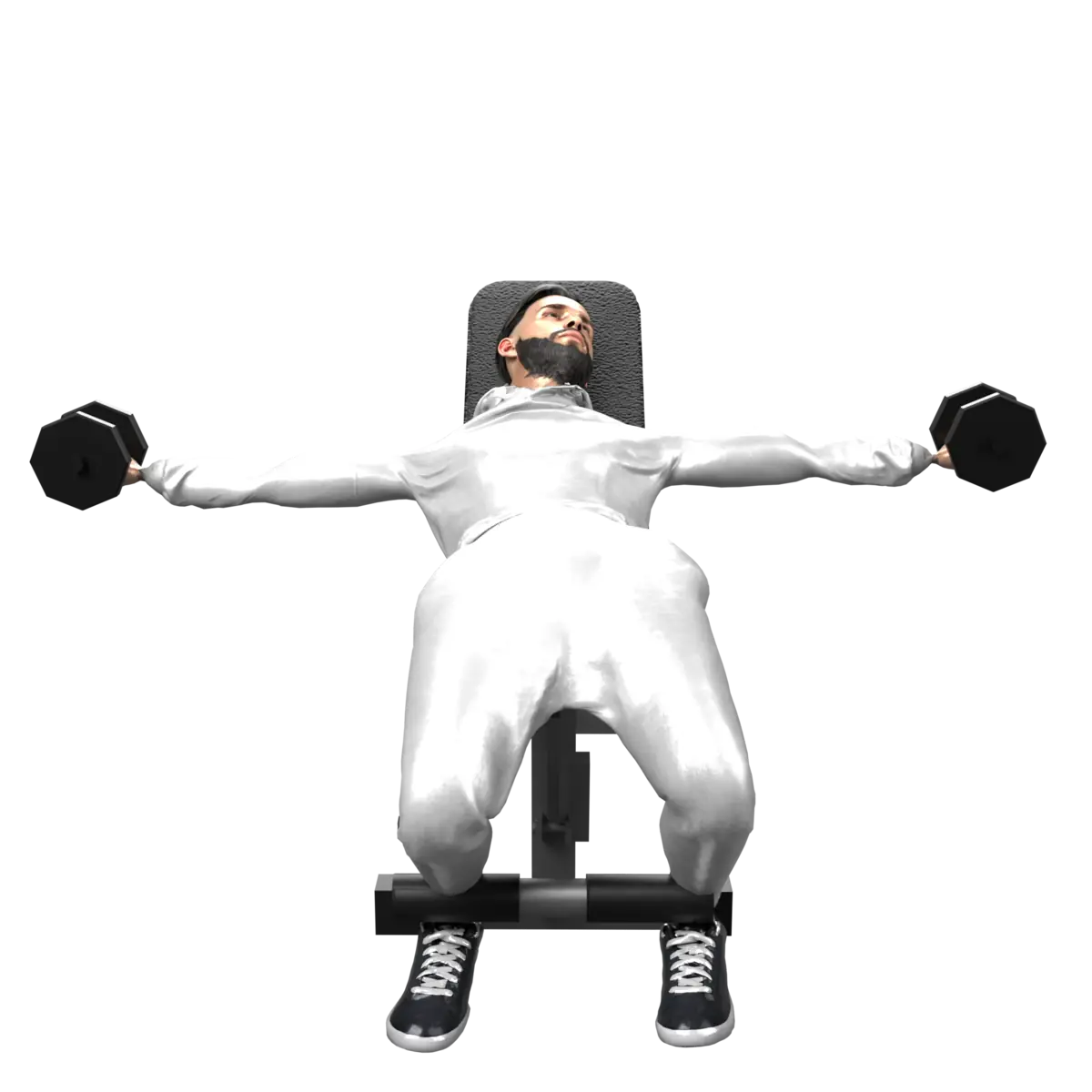
- Open your arms out to the sides in a wide arc. Keep the elbow bend the same the whole way.
- Lower until you feel a deep stretch across your chest. Stop when the dumbbells are about level with your chest, just outside your shoulders.
- Squeeze your chest and bring the dumbbells back up in the same arc until they meet over your chest.
- Keep your upper back tight on the bench. After the last rep, bring the dumbbells to your chest and sit up.
Common dumbbell fly mistakes
- Bending the elbows more on the way up. Then it becomes a press. Lock in a soft bend at the start and keep it for every rep.
- Going too low. Stop when the dumbbells reach chest level. Going deeper puts the strain on the front of the shoulder.
- Arms completely straight. Straight elbows load the joint. Keep a small bend, as if you were hugging a big tree.
- Too much weight. The fly is a light move. Pick a pair you control for 10 to 15 slow reps.
- Shoulders rolling forward at the top. Keep your shoulder blades pinned to the bench. Stop when the dumbbells meet, do not reach higher.
- Swinging the dumbbells up. Lower slowly for about two seconds and pause briefly in the stretch.
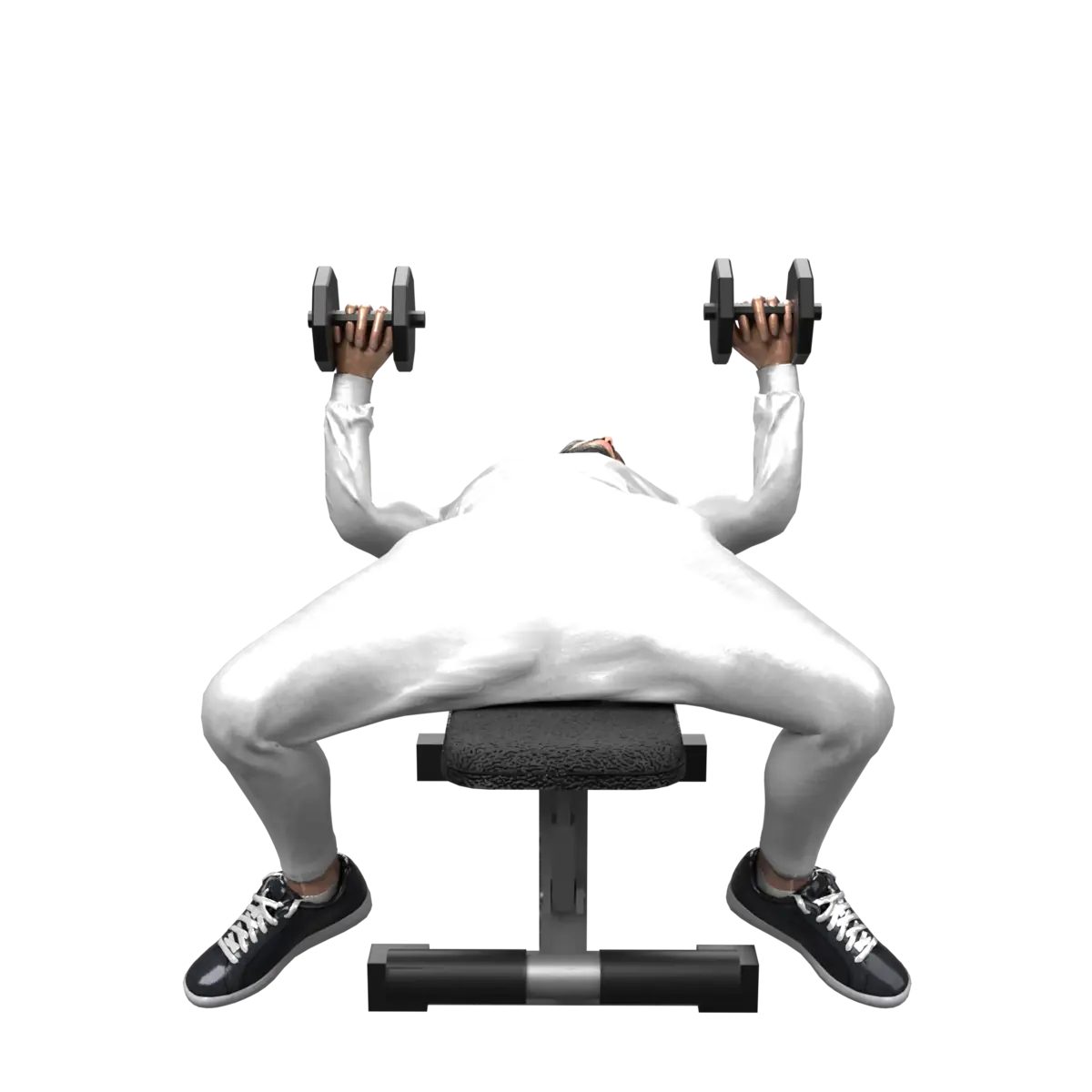
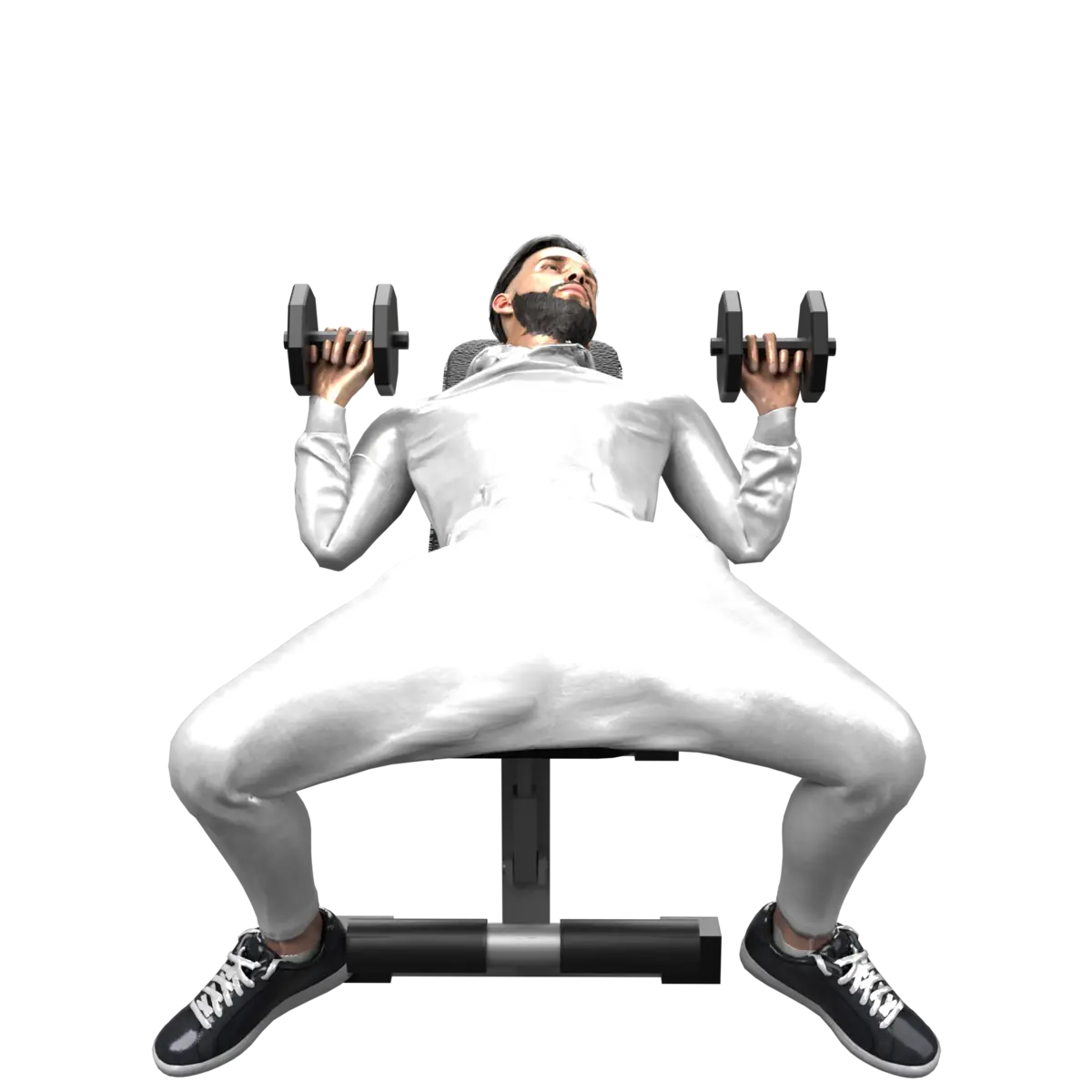
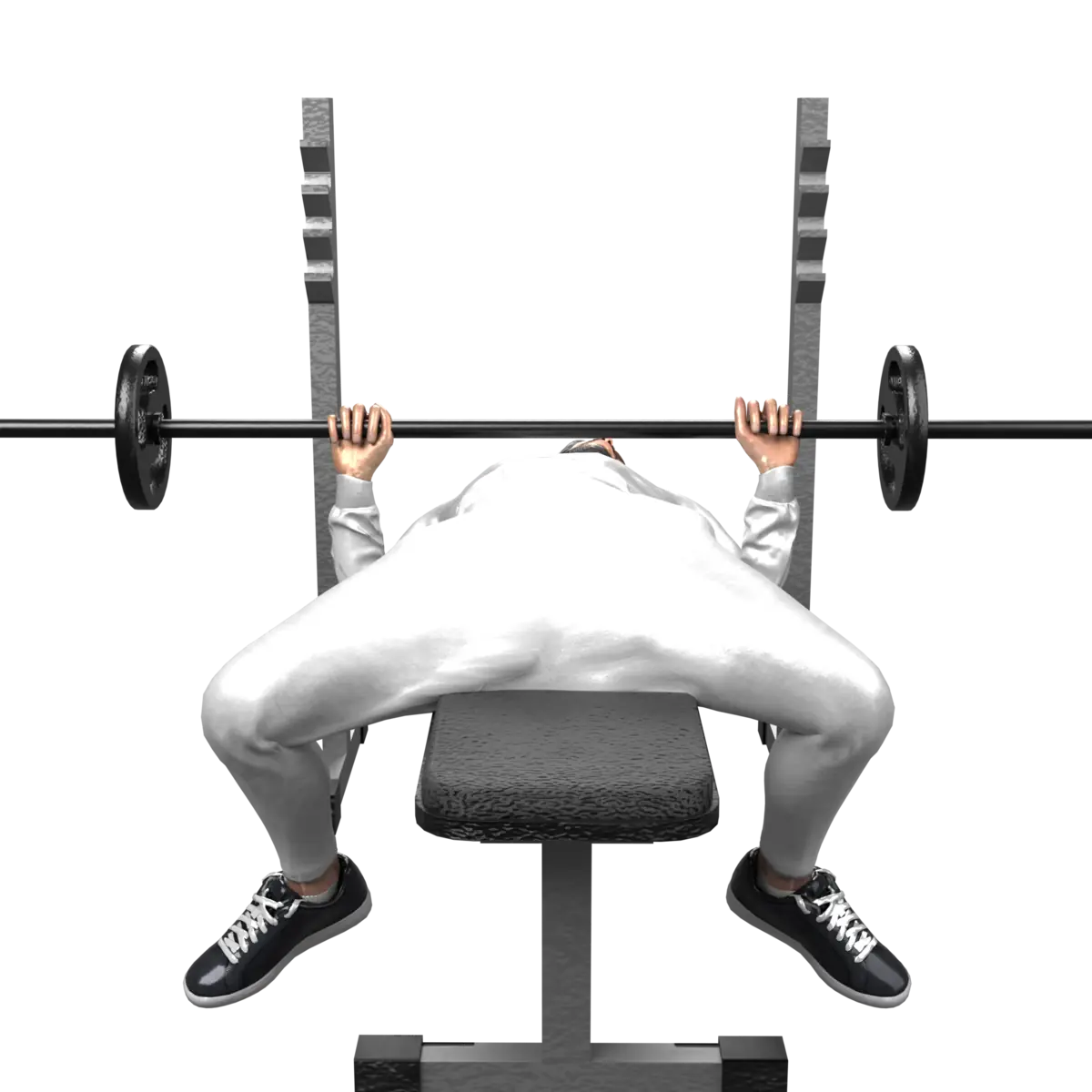
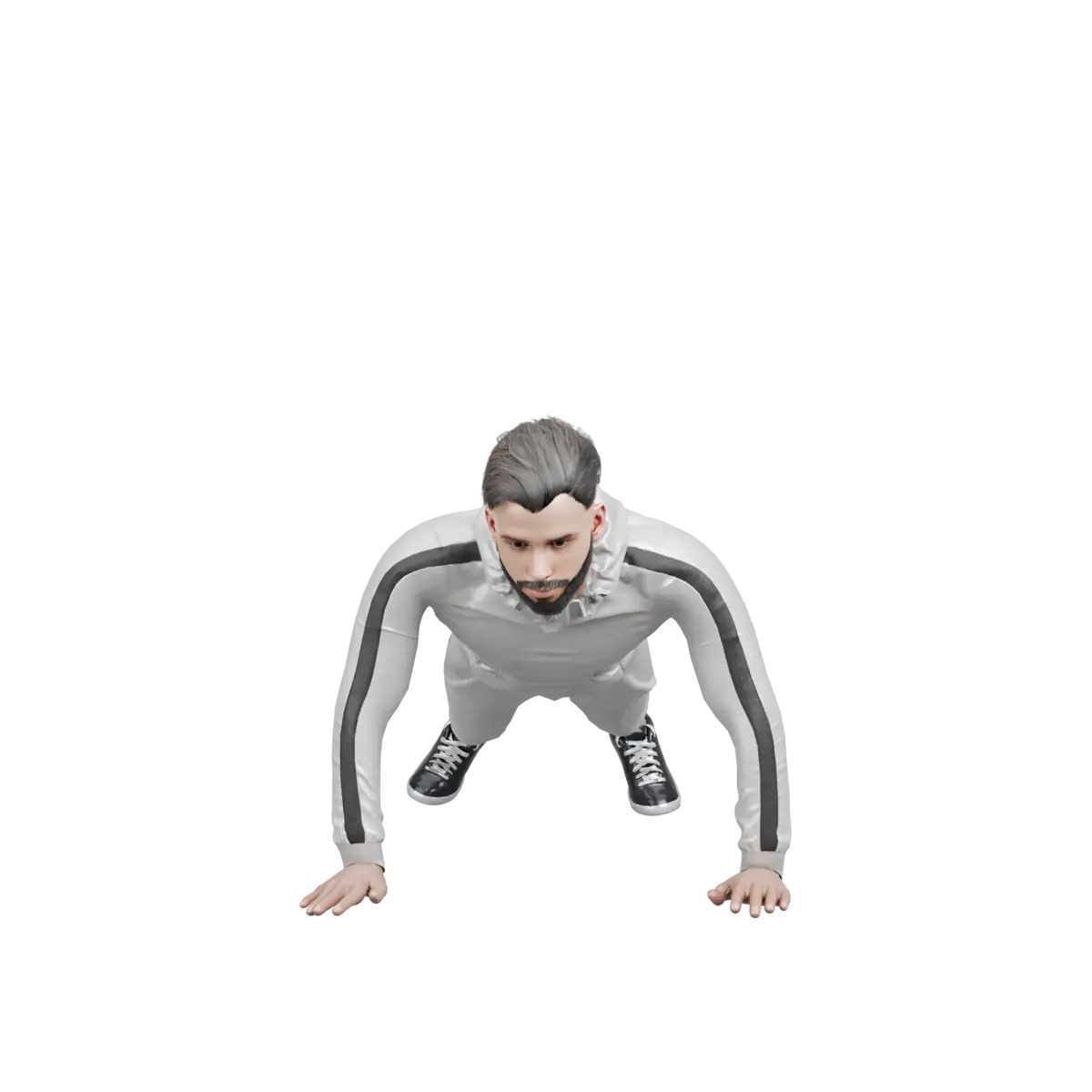
Alternatives: presses and push ups
Same muscles, different equipment.
Good to know
Dumbbell fly from every angle
You lie on a bench with a dumbbell in each hand and open your arms out to the sides in a wide arc, then bring them back together over your chest. Your elbows keep the same soft bend the whole time, so the chest does the work, not the triceps. In the app it is called "Chest Fly". Below is how to set up, how low to go and the mistakes that strain your shoulders.
Muscles worked
The dumbbell fly trains the chest, the upper and the lower part of the pectoralis major. The chest pulls your arms together across your body, and that is the whole movement. The biceps and front delts help hold the arms in place. Because the elbows stay bent at one angle, the triceps do almost nothing, which is the main difference from a press.
Sets and reps for the dumbbell fly
Do 2 to 3 sets of 10 to 15 reps with about 1 to 1.5 minutes of rest. Do it after your main press, as the last chest exercise of the session. Add reps first. Move to the next pair only when every set reaches 15 clean reps with the same elbow bend.
Flat or incline dumbbell fly
On a flat bench the fly trains the whole chest. Set the bench to about 30 degrees and the work moves a little more to the upper chest. The model in the viewer above uses a raised bench, but the movement is the same. Keep the angle low. A steep bench turns more of the work over to the front delts.
Dumbbell fly vs dumbbell press
In the press the elbows bend and straighten, so the triceps help and you can lift much more. In the fly the elbows stay fixed, so only the chest moves the weight. Use the press to build strength and the fly to finish the chest with a deep stretch. Most plans have both, the press first.
Alternatives: presses and push ups
The dumbbell bench press uses the same dumbbells and bench with heavier weight. The incline dumbbell press puts more work on the upper chest. At home without a bench, push ups train the same muscles with body weight.
Plans with the dumbbell fly
The dumbbell fly is not part of the ready plans in GymDroid. Add it to your own workout after your main chest press, log every set, and the app shows you what you lifted last time. On iPhone and Android.
Full Body Foundation · Curves & Confidence · Dumbbell Home Essentials
What muscles do dumbbell flys work?
Mainly the chest, upper and lower part. The front delts and biceps help hold the arms in place.
Are dumbbell flys good for building chest?
Yes, as an extra move after a press. They give the chest a deep stretch with a light weight. Do not use them as your only chest exercise.
How heavy should dumbbell flys be?
Much lighter than your dumbbell press. Pick a pair you can control for 10 to 15 slow reps. Many people start with 4 to 8 kg per hand.
How low should you go on dumbbell flys?
Until the dumbbells are about level with your chest and you feel a stretch. Stop sooner if your shoulders hurt, and see a professional if the pain stays.
Is the chest fly the same as the dumbbell fly?
The chest fly is the movement. It can be done with dumbbells, cables or a machine. GymDroid calls the dumbbell version "Chest Fly".
Can I do dumbbell flys at home?
Yes, with a bench and a pair of dumbbells. Without a bench, do them on the floor. The floor stops your elbows, so you cannot go too low.

Plans with the dumbbell fly
The dumbbell fly is not part of the ready plans in GymDroid.


Updated