GymDroid
How Many Sets and Reps to Build Muscle: The Numbers That Work
Do 10 to 20 hard sets per muscle a week, 6 to 20 reps a set, stopping 1 to 3 reps short of failure.

How many sets and reps to build muscle? The research answer is simple: 10 to 20 hard sets per muscle group a week, 6 to 20 reps a set, and most sets stopped 1 to 3 reps short of failure. A beginner can start at the bottom of that range, about 10 sets per muscle, spread over 3 gym days.
This guide gives you the numbers, explains why the weekly total matters more than any single workout, and shows how a real 3 day week looks.
The short answer: 10 to 20 sets per muscle per week
Muscle growth follows the amount of hard work a muscle does in a week. Sets are the easiest way to count that work.
A 2017 meta analysis by Schoenfeld and colleagues compared training volumes across many studies. Groups doing 10 or more sets per muscle a week grew clearly more than groups doing fewer than 5. Later reviews show the gains keep rising, more slowly, up to about 20 sets a week.
So the practical zone is 10 to 20 sets per muscle per week. Where you sit in it depends on experience:
- Beginners, first 6 to 12 months: 8 to 12 sets per muscle a week.
- Intermediates, 1 to 3 years: 12 to 16 sets.
- Advanced lifters: 16 to 20 sets, sometimes more for a lagging muscle.
More is not always better. Past 20 sets recovery becomes the limit, and the minimum sets per week for muscle growth is low: even 4 to 6 hard sets a week keep a muscle growing slowly. If you are short on time, a few hard sets beat none.
What counts as a hard set
Only working sets count. Warm up sets with light weight do not. A set counts when it ends 0 to 3 reps before you could not do another rep with good form.
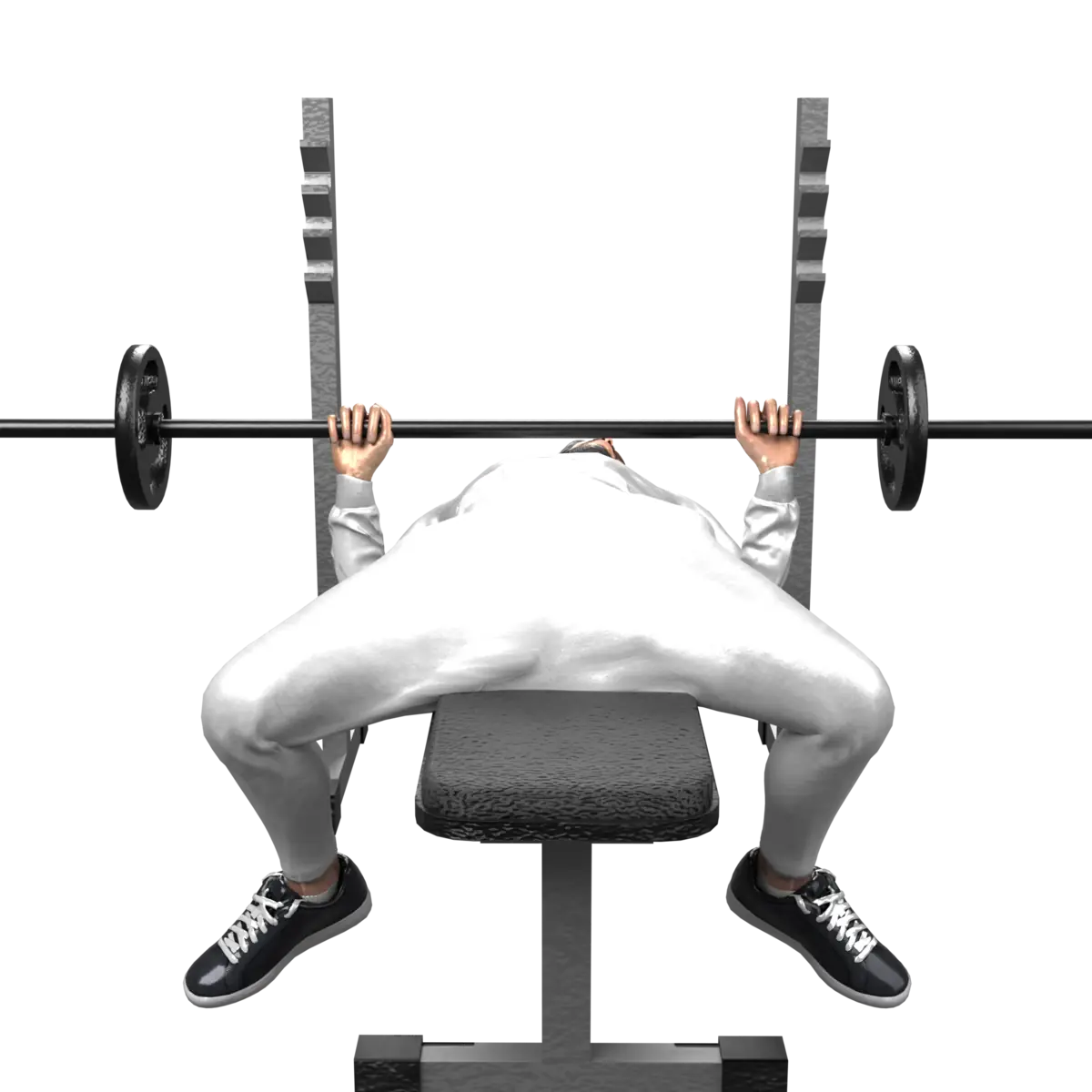
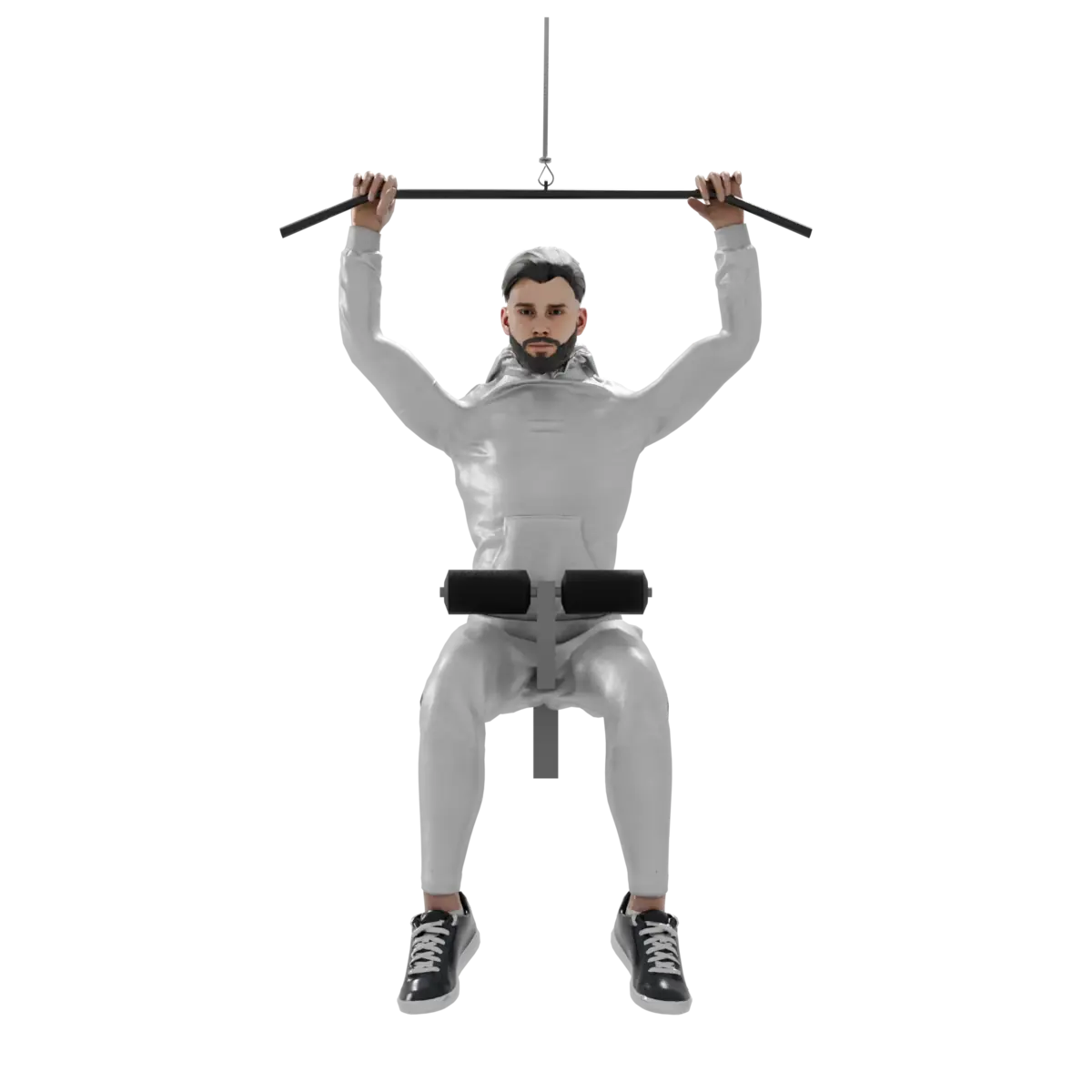
Compound lifts count for more than one muscle. A squat is a set for the quads and the glutes. A bench press is a set for the chest and about half a set for the triceps and front shoulders. A lat pulldown is a set for the back and about half a set for the biceps.
How many reps per set to build muscle
For years lifters were told that 8 to 12 reps was the only hypertrophy range. The research since 2015 shows a wider picture. Sets of 5 reps and sets of 30 reps build about the same muscle, as long as each set gets close to failure.
The rep range still matters for how practical the set is:
| Reps per set | Load | Best for |
|---|---|---|
| 1 to 5 | Very heavy | Strength, some muscle, hard to recover from |
| 6 to 12 | Heavy | Compound lifts, the best mix of load and fatigue |
| 12 to 20 | Moderate | Machines, dumbbells, isolation moves |
| 20 to 30 | Light | Bodyweight, home training, joints that need a break |
A good default for most lifters is 6 to 12 reps on the big barbell lifts and 10 to 20 reps on everything else. Heavy sets of 5 build strength you can use later, high rep sets of 20 are brutal on the squat but fine on a leg extension.
Pick a range, not one number. “3 sets of 8 to 12” means you keep the same weight until every set reaches 12 reps, then you add weight and drop back to 8. That is progressive overload built into the rep range.
How many sets per workout
Your weekly total is what counts, but the way you split it also matters. A muscle can only do so many productive sets in one session.
Studies that pushed more than about 10 hard sets per muscle in a single workout found little extra growth from the extra sets. The sets after that point tend to be weaker and sloppier.
A sensible rule:
- 4 to 10 hard sets per muscle per session.
- Each muscle trained 2 times a week, or 3 for small muscles that recover fast.
- Weekly target reached by adding sessions, not by stuffing one session.
The math for a 12 set weekly target is simple. Two sessions with 6 sets each, or three sessions with 4 sets each. Both work. Three sessions usually feel easier and keep every set at a higher quality.
One full body session with 3 sets per big muscle, repeated 3 times a week, already puts you at 9 sets per muscle. That is why full body training is such a good start for a beginner.
How close to failure each set should go
Training volume only works when the sets are hard. A set of 10 with a weight you could lift 20 times is not a hypertrophy set, it is a warm up.
The easiest way to judge effort is reps in reserve, or RIR: how many more reps you could have done. Aim for:
- 1 to 3 RIR on most sets. Close enough to failure to grow, far enough to keep form and recover.
- 0 RIR, true failure, only on the last set of isolation exercises like curls or lateral raises.
- Never to failure on heavy squats, deadlifts and bench presses without a spotter or safety bars.
Beginners usually underestimate how many reps they have left. When you think you have 2 left, you often have 5. For the first few months, when a set feels hard, do one more rep than you planned.
A beginner week: 3 days, 10 sets per muscle
Here is how the numbers come together for someone with 3 gym days. This is the structure of the Full Body Foundation plan: every session trains the whole body, so each muscle gets hit 3 times a week.
Every session has a press, a pull and a leg exercise, then a smaller move for shoulders, arms and core. Each exercise gets 3 sets, the weighted lifts in a 6 to 10 rep range, with 60 seconds to 3 minutes of rest.
| Muscle | Day A | Day B | Day C |
|---|---|---|---|
| Chest | Bench press, 3 sets | Dumbbell chest press, 3 sets | Incline bench press, 3 sets |
| Back | Barbell row, 3 sets | Lat pulldown, 3 sets | Seated row, 3 sets |
| Legs | Back squat, 3 sets | Leg curl, 3 sets | Leg extension, 3 sets |
| Shoulders and arms | 3 sets | 3 sets | 3 sets |
That is 9 direct sets a week for chest, back and legs. Add the half sets from compound lifts and every muscle lands at about 10 to 12 sets a week. That is exactly the beginner zone. A session takes 50 to 60 minutes.
In the GymDroid app the plan is already built this way. Each exercise shows its sets, reps and rest, you tap in the weight and reps you did, and next week the previous numbers sit right there to beat.
How this grows over time
After about 3 months, growth slows at 9 to 12 sets. Then you move toward the middle of the zone:
- Add a fourth set to the main lift of each session. That alone adds 3 sets a week per muscle.
- Add one isolation exercise for a muscle that lags, for example 3 sets of curls on day B.
- Only move to a 4 day split when 3 full body days are no longer enough, usually after a year or more.
Change one thing at a time. Add sets, then wait 4 to 6 weeks to see if the log improves.
Progress is the part most people miss
The right sets and reps only build muscle if the numbers in your log go up. The same 3 sets of 10 with the same weight for 6 months is not a hypertrophy plan, it is maintenance.
The simplest progression for every rep range:
- Pick the weight that lets you hit the bottom of the range, say 8 reps, with 1 to 2 RIR.
- Keep that weight every session until all sets reach the top of the range, 12 reps.
- Add 2.5 kg on upper body lifts or 5 kg on lower body lifts and start again at 8.
On machines and dumbbells the jumps are bigger, so you may need to add a rep for a few weeks before the weight goes up. That is fine. Reps are progress too.
Eating enough protein makes this easier. If your lifts stall for weeks, check your intake with the guide on how much protein to build muscle before you add more sets.
Common mistakes with sets and reps
- Counting easy sets. Ten sets at 5 RIR are worth less than five sets at 1 RIR. Make the set hard first, then count it.
- Doing 20 sets per muscle in one session once a week. The last 10 sets are weak and you are sore for 4 days. Split the volume over 2 or 3 days.
- Changing exercises every week. You cannot see progress on a lift you only did once. Keep the same main lifts for 8 to 12 weeks.
- Training to failure on everything. It feels productive but it slows recovery, and you end up doing fewer quality sets across the week.
- Ignoring rest between sets. Resting 2 to 3 minutes on compound lifts lets you keep more reps per set, which means more useful volume.
- Not writing anything down. Without a log you guess, and most people guess that they are doing more than they are.
Your numbers in one list
- Weekly: 10 to 20 hard sets per muscle, beginners 8 to 12.
- Per session: 4 to 10 sets per muscle.
- Frequency: each muscle 2 to 3 times a week.
- Reps: 6 to 12 on big barbell lifts, 10 to 20 on the rest.
- Effort: 1 to 3 reps short of failure on most sets.
- Progression: same weight until the top of the range, then add 2.5 to 5 kg.
Start at the low end, log every set and add volume only when progress stops. In 3 months the log will show heavier sets on the same lifts, and that is what building muscle actually looks like.