GymDroid
Gym Workout Plan for Beginners: Your First Month, Day by Day
Three full body days a week, 7 exercises a session, 3 sets of 6 to 10 reps, and a small weight jump each week.
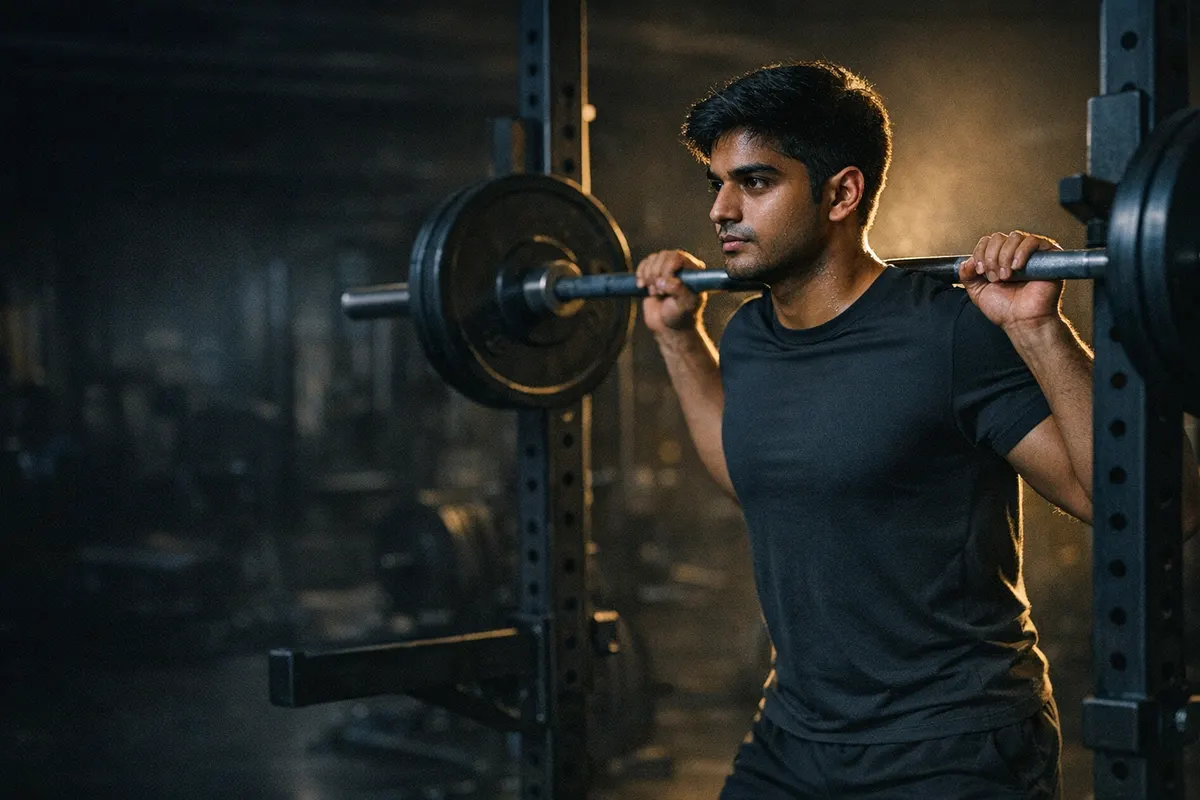
A good gym workout plan for beginners is simple: 3 full body days a week, 7 exercises a session, 3 sets of 6 to 10 reps, and a small weight increase every week. That is the whole plan. Below you get the exact exercises for day A, B and C, the weights to start with, and what to change in weeks 2, 3 and 4.
This is the structure of the Full Body Foundation plan, built for your first year of lifting. You do not need a PDF or a personal trainer to start. You need a barbell, a bench, a few machines and about 55 minutes three times a week.
The plan in one table
Every session trains the whole body: a press, a pull, a leg exercise, then arms, shoulders and core. You rotate three days, A, B and C, with a rest day between. Monday, Wednesday and Friday works for most people.
| Slot | Day A | Day B | Day C |
|---|---|---|---|
| Chest | Bench press | Dumbbell chest press | Incline bench press |
| Legs | Back squat | Seated leg curl | Leg extension |
| Back | Barbell row | Lat pulldown | Chest supported row |
| Shoulders | Overhead press | Cable shoulder press | Lateral raise |
| Arms | EZ bar curl, dip machine | Preacher curl, rope triceps extension | Dumbbell curl, overhead triceps extension |
| Core | Crunches | Cable ab crunch | Side crunches |
Every weighted exercise is 3 sets of 6 to 10 reps. The core moves are 3 sets of as many clean reps as you can.
Day A is the heavy barbell day. Day B is lighter, mostly cables and machines, so your body recovers while you still train. Day C mixes the two. Together the three days give every big muscle about 9 to 12 hard sets a week, which is exactly the dose a beginner grows on. If you want the full reasoning behind those numbers, read how many sets and reps build muscle.
Why 3 full body days beat a split for beginners
Most beginner plans online are splits: chest day, back day, leg day. They look serious, but they are the wrong tool for your first year.
- You squat once a week on a split and three times a week here. Three practice sessions a week is how a new lift gets good fast.
- Beginners recover quickly. A muscle trained with 3 hard sets is ready again in 48 hours.
- Miss a day on a split and your chest waits two weeks. Miss a day here and you simply do the next letter.
Each session is also short enough to finish. The plan that works is the one you still follow in week 4.
Day A, B and C in detail
Rest 2 to 3 minutes after the barbell lifts, 60 to 90 seconds after machine and arm exercises. Rest long enough to hit the rep range again, not longer.
Day A: the barbell day
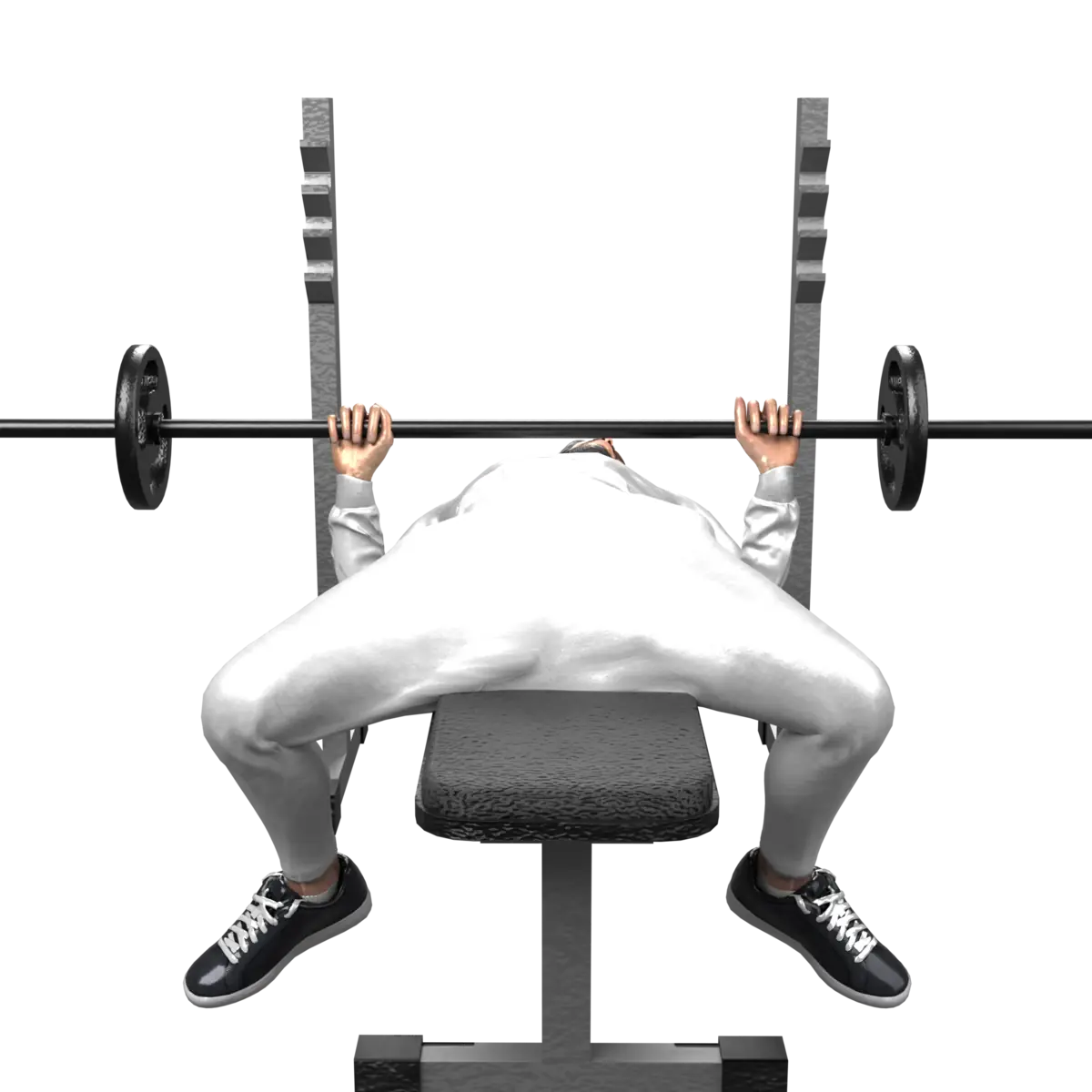
- Bench press, 3 sets of 6 to 10. Feet flat, shoulder blades pulled back, bar touches the lower chest.
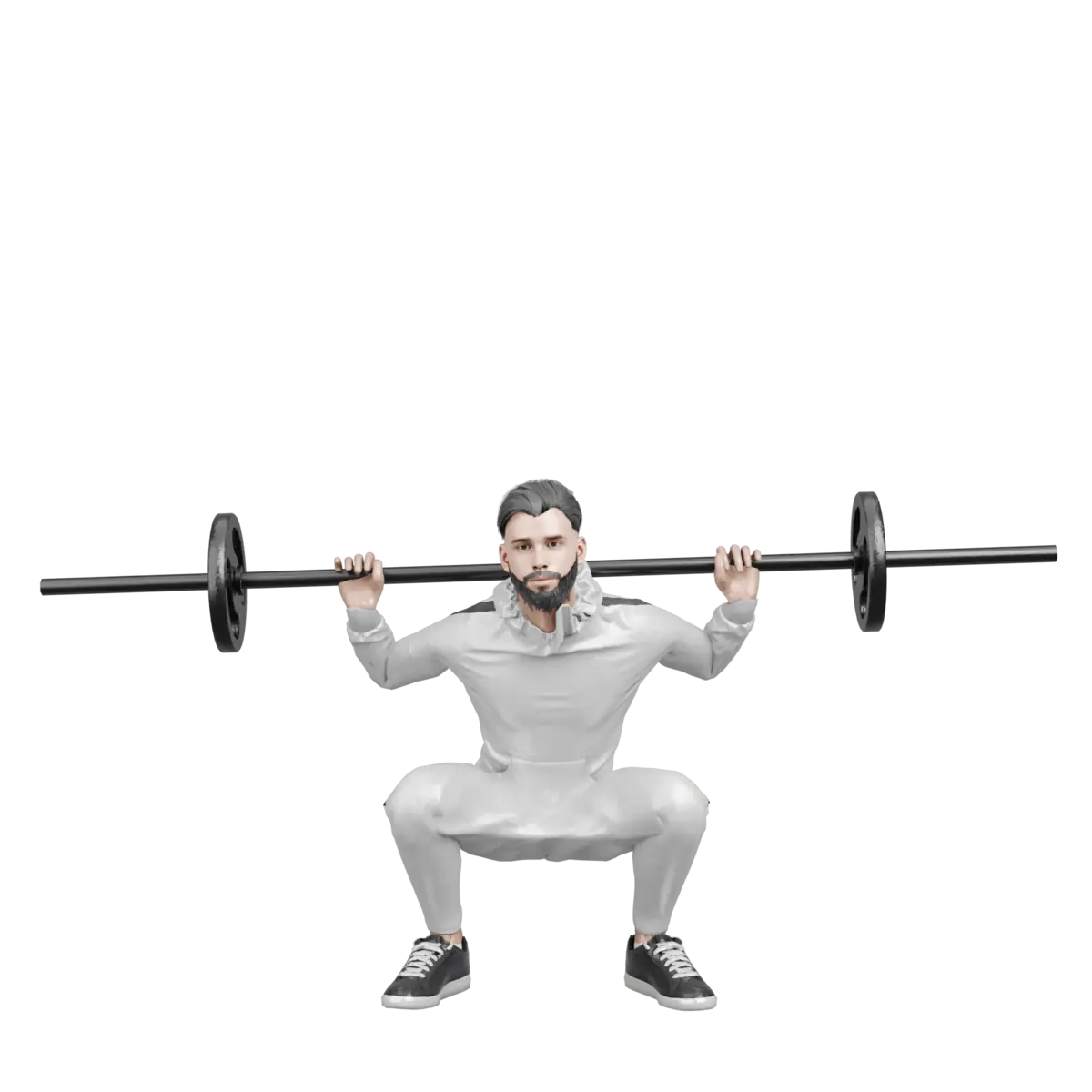
- Back squat, 3 sets of 6 to 10. Bar on the upper back, sit down between your heels, knees follow the toes.
- EZ bar curl, 3 sets of 6 to 10.
- Dip machine, 3 sets of 6 to 10. Swap for dumbbell kickbacks if your gym has no machine.
- Overhead press, 3 sets of 6 to 10. Standing, bar from the collarbone to over the head, ribs down.
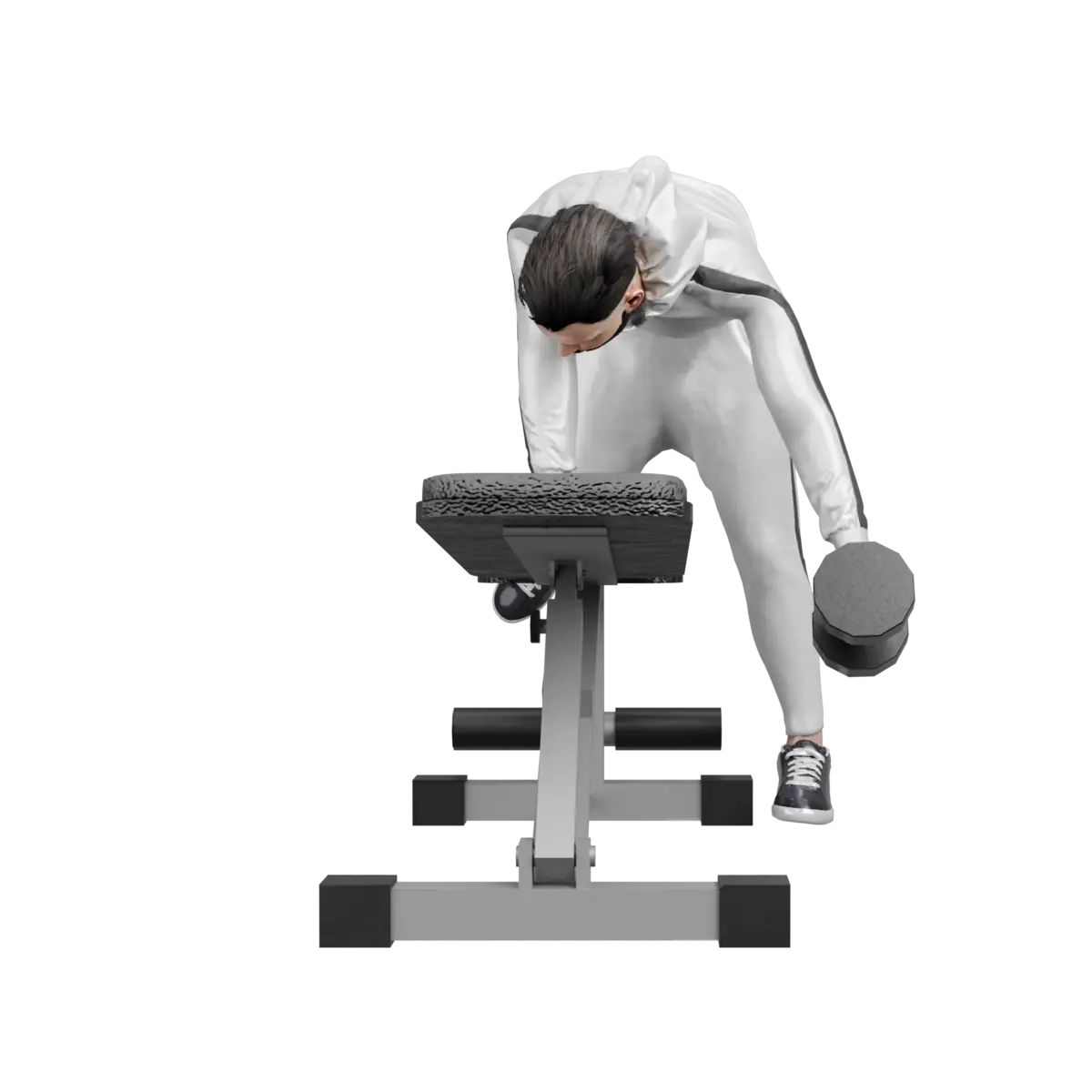
- Barbell row, 3 sets of 6 to 10. Hinge to about 45 degrees, pull the bar to the lower ribs. A dumbbell row is the swap if your lower back feels it more than your lats.
- Crunches, 3 sets.
Day B: the machine day
- Lat pulldown, wide neutral grip, 3 sets of 6 to 10. Pull to the upper chest, elbows down and back.
- Dumbbell chest press, 3 sets of 6 to 10.
- Seated leg curl, 3 sets of 6 to 10. Hips stay in the seat, lower slowly.
- Preacher curl, 3 sets of 6 to 10.
- Rope triceps extension, 3 sets of 6 to 10.
- Cable shoulder press, 3 sets of 6 to 10.
- Cable ab crunch, 3 sets.
Day C: the upper chest and upper back day
- Incline bench press, 3 sets of 6 to 10. Bench at 30 degrees, bar to the upper chest.
- Leg extension, 3 sets of 6 to 10. Pause for a second at the top.
- Chest supported row, 3 sets of 6 to 10. Chest stays on the pad, squeeze the shoulder blades.
- Dumbbell curl, 3 sets of 6 to 10.
- Overhead triceps extension, 3 sets of 6 to 10.
- Lateral raise, 3 sets of 6 to 10. Light weight, slight lean forward, lead with the elbows.
- Side crunches, 3 sets.
Every exercise in the GymDroid app can be viewed from every angle before you lift, so you walk up to the station already knowing where your feet and hands go.
How heavy to start
Beginners start too heavy far more often than too light. In week 1 pick a weight you could lift for 12 to 15 reps and do 10. It will feel easy. That is correct.
- Squat and bench press: start with the empty 20 kg bar. Add 5 kg per session until 10 reps feels like work.
- Overhead press and barbell row: the empty bar, or 10 to 15 kg on a short bar.
- Machines: the second or third plate on the stack. Adjust after the first set.
- Dumbbells: 4 to 8 kg for curls and lateral raises, 8 to 12 kg for the chest press.
If you have lifted before and know a recent set, the one rep max calculator turns it into a sensible starting weight. If you have never lifted, skip the calculator and let the first two sessions find the weight for you.
Weeks 1 to 4: how to add weight
The plan stays the same for all four weeks. The weights go up. That is what makes the first month work, and it is the part most beginners never write down.
The rule is called double progression:
- Start at 6 to 8 reps with a weight that leaves 2 to 3 reps in the tank.
- Keep the weight and add a rep or two each session until all 3 sets reach 10.
- Next session add 2.5 kg on upper body lifts or 5 kg on the squat, and start again at 6 to 8.
Here is how a realistic first month looks for someone who starts the squat with 30 kg:
- Week 1: 30 kg for 3 sets of 8, 8, 7. Learn the movement.
- Week 2: 30 kg for 10, 10, 9, then 35 kg for 8, 8, 7 on Friday.
- Week 3: 35 kg for 10, 9, 8, then 40 kg for 7, 7, 6.
- Week 4: 40 kg for 10, 9, 9, ready for 45 kg in week 5.
That is 15 kg on the squat in a month, with no session that felt like a maximum. The same pattern runs on every exercise. Machines and dumbbells jump in bigger steps, so there you may add reps for two or three sessions before the weight moves. Reps are progress too.
In the app the plan does this math for you. You log the weight and reps of each set, and when all three sets hit 10 the next session shows the new weight. You never have to remember what you did on Monday.
Your first week in the gym: what to expect
The first week in the gym is less about muscle and more about getting comfortable. A few things nobody tells you:
- Warm up for 5 to 10 minutes: a brisk walk or easy bike, then one or two light sets of the first exercise.
- You will be sore on days 2 and 3, mostly in the legs and chest. That fades after the second week. Train through mild soreness, rest if a joint hurts.
- Stations will be busy. Every exercise has a swap: dumbbell row for barbell row, dumbbell shoulder press for the barbell, pull ups for the lat pulldown.
- Nobody is watching you. The people who look strong were beginners once, and most will happily show you how a machine adjusts.
Eat enough protein to support the work. Around 1.6 g per kg of body weight a day is the target, and the guide on how much protein to build muscle shows what that looks like on a plate.
After the first month
In weeks 5 to 8 nothing changes except the numbers. Keep the same three days and keep adding weight whenever all sets reach 10 reps. For most beginners the squat and bench keep moving every week for 3 to 4 months. An 8 week gym workout plan for beginners is really this plan, run twice.
When a lift stalls for two weeks in a row, do one of these, not all three:
- Drop the weight by 10 percent and work back up over two weeks.
- Add a fourth set to that exercise.
- Swap one machine move for a free weight version, for example the seated leg curl for a Romanian deadlift once your hinge is solid.
Full Body Foundation runs for 9 weeks in the app by default, with 5, 13 and 17 week options. Week 1 is on the plan page in full. From week 2 the app reads what you logged and sets each next weight for you, so the first month above becomes the first season.
Mistakes that ruin a beginner plan
- Changing the plan every week. You cannot see progress on an exercise you did once. Give these three days 8 weeks.
- Adding exercises. Seven is enough. Four extra arm moves give you sore arms and a slower squat.
- Starting heavy. Ego on day one costs you week two. Start light and let the progression catch up.
- Skipping legs. Day A squats, day B curls, day C extends. Three leg exercises a week is the minimum.
- Not logging. Writing down 3 sets of 8 at 30 kg is the difference between a plan and a hobby.
- Going every day. Rest days are when muscle is built. Three sessions, four rest days.
Start on Monday with day A. By Friday of week 4 you will have done 12 sessions, and your log will show heavier squats, presses and rows than on day one. That is what a gym workout plan for beginners is supposed to do.