GymDroid
Push Pull Legs Split: Every Day, Every Exercise, 3 or 6 Days
Push day trains chest, shoulders and triceps, pull day trains back and biceps, leg day trains the whole lower body, and you run the cycle 3 or 6 days a week.

A push pull legs split divides your training into three days by movement. Push day trains chest, shoulders and triceps. Pull day trains back and biceps. Leg day trains quads, hamstrings, glutes and calves. You run the cycle 3 days a week, or twice through for 6 days.
That is the whole idea. Below you get the exact exercises for each day, sets and reps for both versions, and an honest answer to the big question: is PPL right for you, or is full body still the better choice?
What a push pull legs split is
The split groups muscles that work together. When you bench press, your chest, front shoulders and triceps all push the bar. When you row, your back, rear shoulders and biceps all pull. Training them on the same day means one muscle never gets hit two days in a row.
| Day | Main muscles | Typical lifts |
|---|---|---|
| Push | Chest, shoulders, triceps | Bench press, overhead press, dips |
| Pull | Back, rear shoulders, biceps | Pull ups, rows, curls |
| Legs | Quads, hamstrings, glutes, calves | Squat, Romanian deadlift, leg press |
The benefit is focus. Each session has 5 to 6 exercises for a few muscles, so you can push hard on each one. The cost is frequency: on 3 days a week, each muscle is trained only once.
PPL split: how many days a week
There are two common versions. Choose by how many days you can really train, not by how many you wish you could.
The 3 day PPL routine
You train push, pull and legs once each, with a rest day between. For example:
- Monday: push
- Wednesday: pull
- Friday: legs
This is the easy version to keep. Sessions last 50 to 70 minutes, and you always have a free day to recover. The downside is that each muscle gets one session a week, about 6 to 9 hard sets. That still builds muscle, but it sits at the low end of the range.
The 6 day PPL routine
You run the cycle twice: push, pull, legs, push, pull, legs, then one rest day. Each muscle is now trained twice a week with 10 to 18 hard sets, which is right in the range that grows muscle best.
It also asks a lot. Six sessions a week means sleep, food and stress all have to be in order. If you miss one day, the whole week shifts. This version is for people who already train regularly and truly like being in the gym.
A middle option
If 6 days is too much and 3 feels too little, rotate the cycle across 4 or 5 days. Train push, pull, legs, rest, then start again. Each muscle is trained about 1.5 times a week. It works well and nobody has to follow a fixed weekday.
Push day: chest, shoulders and triceps
Start with the heaviest lift while you are fresh. Rest 2 to 3 minutes after the big presses and 60 to 90 seconds after the smaller moves.
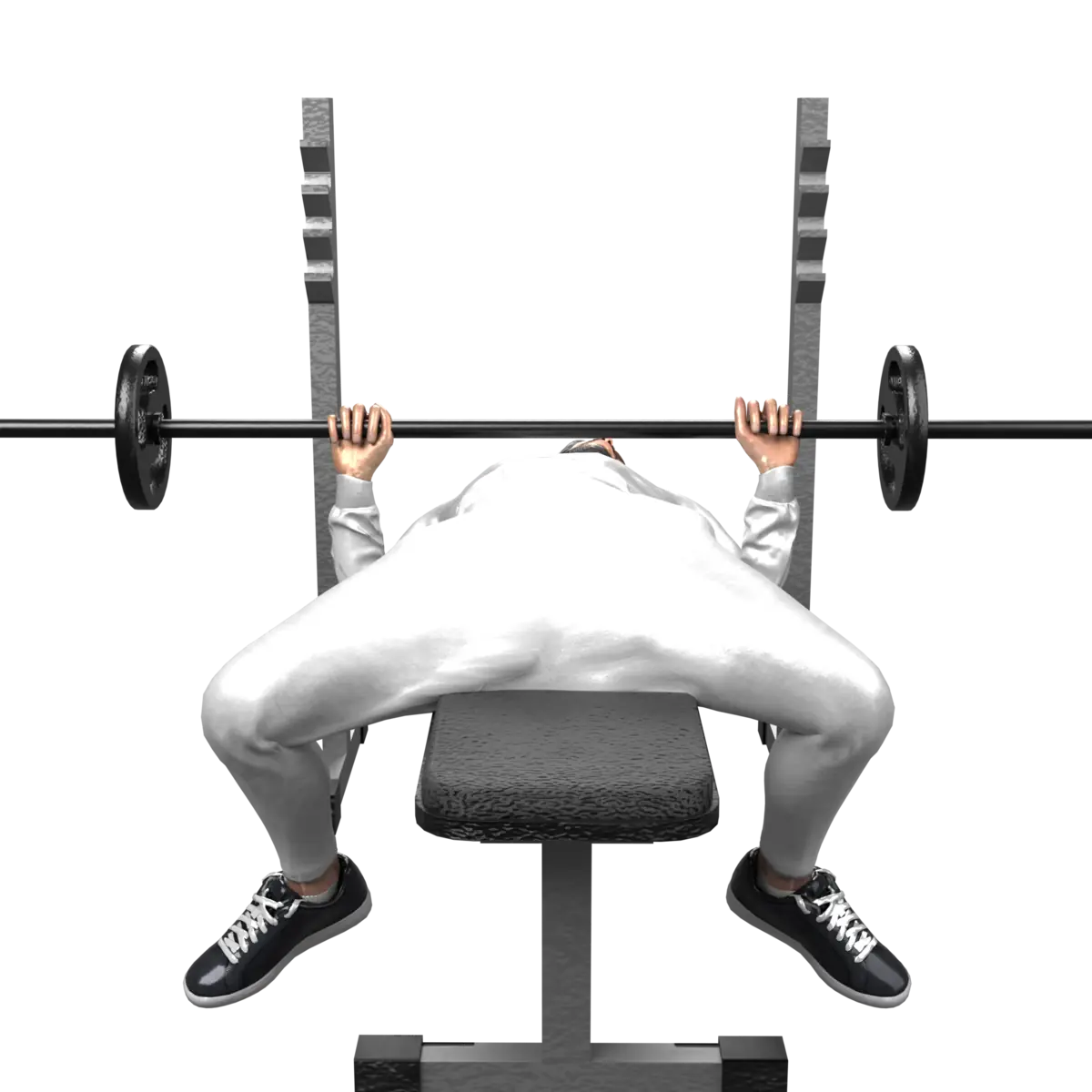
- Bench press, 3 sets of 6 to 10 reps.
- Overhead press, 3 sets of 6 to 10 reps.
- Incline dumbbell press, 3 sets of 8 to 12 reps.
- Lateral raise, 3 sets of 12 to 15 reps.
- Triceps pushdown, 3 sets of 10 to 15 reps.
On the 6 day version, make the second push day a little different. Swap the bench press for an incline bench press and the overhead press for a dumbbell shoulder press. Same muscles, a slightly different angle.
Pull day: back and biceps
Your back has big muscles and it can handle a lot of work. Mix a vertical pull (from above) with a horizontal pull (to your chest).
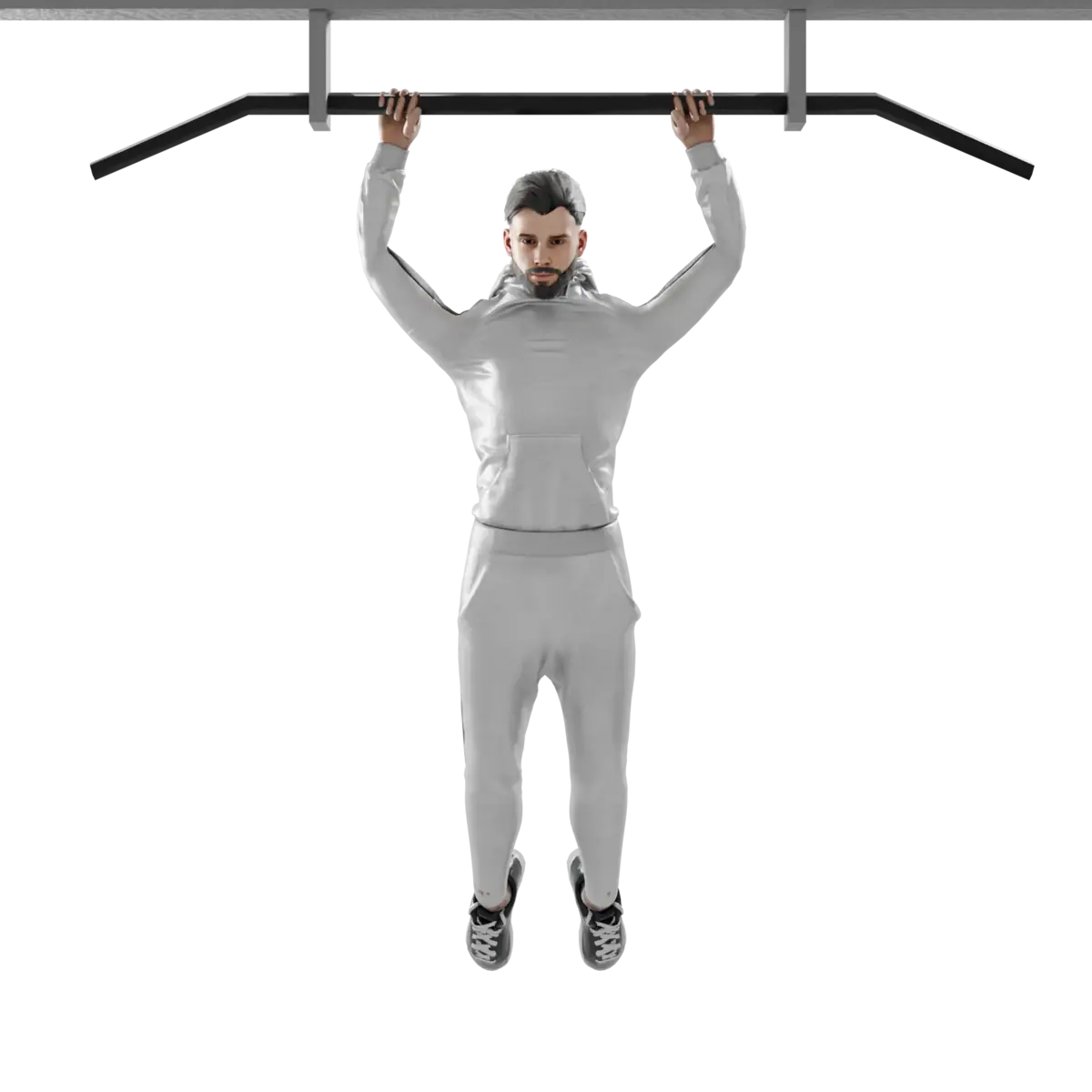
- Pull up, 3 sets of 5 to 10 reps. Use the lat pulldown if you cannot do 5 clean reps yet.
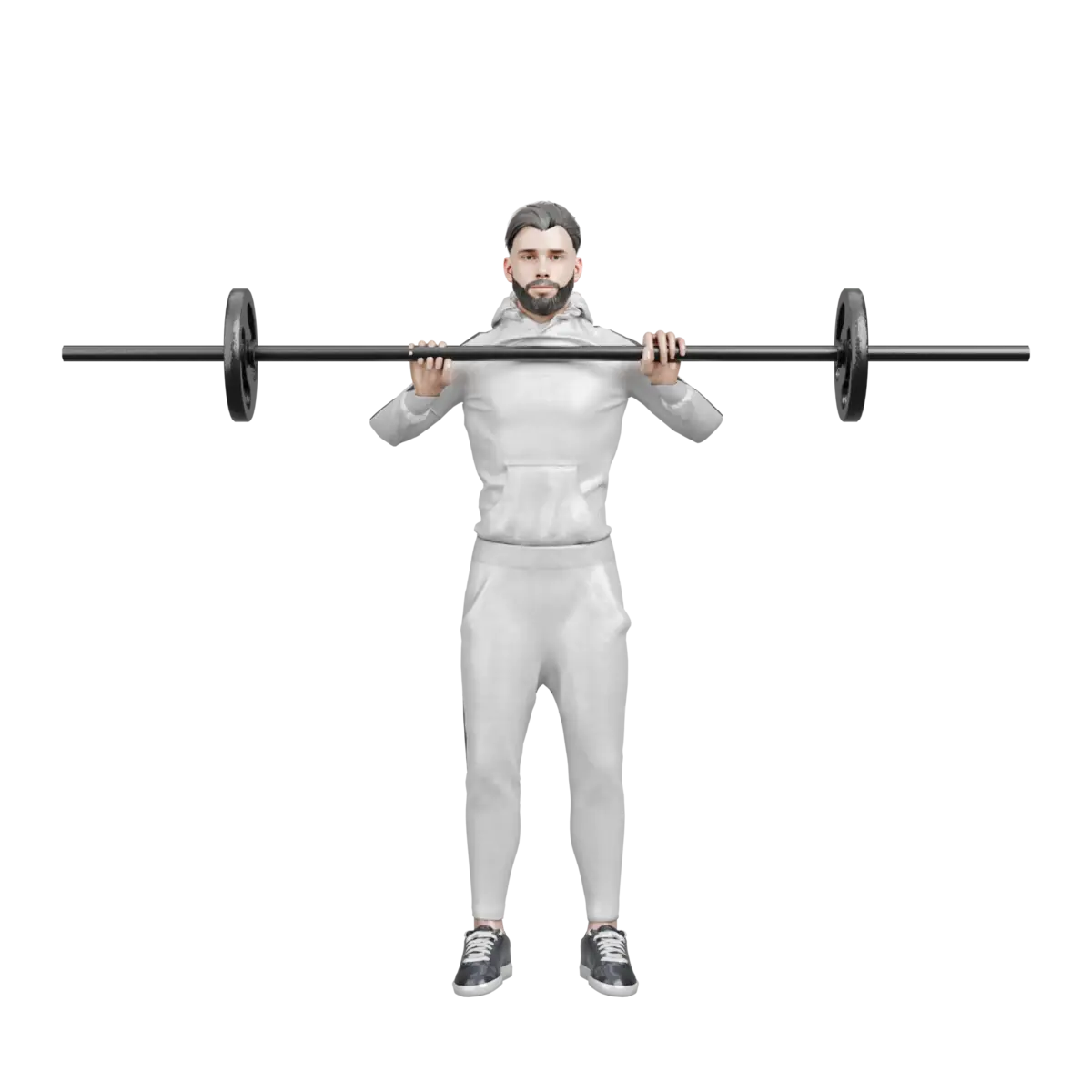
- Barbell row, 3 sets of 6 to 10 reps.
- Seated cable row, 3 sets of 10 to 12 reps.
- Face pull or rear delt fly, 3 sets of 12 to 15 reps.
- Biceps curl, 3 sets of 8 to 12 reps.
- Hammer curl, 2 sets of 10 to 12 reps.
On the second pull day, swap pull ups for lat pulldowns and the barbell row for a one arm dumbbell row. Your lower back gets a lighter day that way.
Leg day: quads, hamstrings and glutes
Leg day is the one most people skip. Do not. Your legs hold about half of your muscle mass, and strong legs make every other lift feel more stable.
- Squat, 3 sets of 6 to 10 reps.
- Romanian deadlift, 3 sets of 8 to 10 reps.
- Leg press, 3 sets of 10 to 12 reps.
- Lying leg curl, 3 sets of 10 to 12 reps.
- Standing calf raise, 3 sets of 10 to 15 reps.
On the second leg day, try the Bulgarian split squat or hip thrust instead of the squat, and leg extensions instead of the leg press. Add 2 to 3 sets of an ab exercise at the end of either day.
In the GymDroid library you can see each of these exercises from every angle before you start the set. That matters most on leg day, where foot position and depth make the difference.
How to progress on PPL
A split only works if the weights go up. Use the same simple rule on every exercise, called double progression:
- Pick a weight you can lift for the bottom of the rep range, with 1 to 3 reps left in the tank.
- Keep that weight and add reps each session until every set reaches the top of the range.
- Then add a little weight, 2.5 kg on upper body lifts or 5 kg on squats and Romanian deadlifts, and start at the bottom again.
Here is a bench press example on the 3 day version:
- Week 1: 50 kg for 8, 7, 7.
- Week 2: 50 kg for 9, 8, 8.
- Week 3: 50 kg for 10, 10, 9.
- Week 4: 50 kg for 10, 10, 10.
- Week 5: 52.5 kg for 7, 7, 6.
On 3 days a week this is slower than on full body, because you only practice each lift once. That is normal. Write every set down so you know exactly what to beat next time. For the numbers behind those set counts, read how many sets and reps build muscle.
PPL vs full body: who should pick which
This is where most beginners go wrong. A push pull legs split looks like what experienced lifters do, so it feels like the serious choice. But when weekly sets are equal, research finds muscle growth is about the same with splits and full body training. What matters is how many hard sets you do and whether you keep adding weight.
So the choice comes down to your week:
- Train 2 or 3 days a week: full body. Each muscle is trained 2 to 3 times instead of once.
- Brand new to lifting: full body. You learn the squat and bench faster when you practice them three times a week. Our gym workout plan for beginners gives you that first month day by day.
- Train 6 days a week and recover well: PPL. It spreads high volume over short, focused sessions.
- Lifting for 6 to 12 months and like longer sessions per muscle: 3 day PPL is a fine step.
- Busy, irregular weeks: full body or the rotating PPL. A missed day costs you less.
One more option is worth knowing: the hybrid. Do one full body day, then push, pull and legs. That is 4 days and every muscle is trained twice.
Mistakes that slow down a PPL split
- Too many exercises. Five or six per day is enough. Ten exercises means half of them are junk sets.
- Skipping leg day. Without it, it is not PPL, it is just upper body twice.
- Six days with poor sleep. If your lifts drop for two weeks, go back to 3 or 4 days.
- Changing exercises every week. Keep the main lifts for at least 6 to 8 weeks so you can see progress.
- Only training to failure. Leave 1 to 3 reps in the tank on most sets, especially on squats and rows.
- Forgetting food. Protein of around 1.6 g per kg of body weight a day supports the work on all three days.
Start with the 3 day version for a month. If you recover well and want more, add the second cycle. A push pull legs split is simple, and the simple version, done hard and logged every week, is the one that works.