 GymDroid
Cable hip abduction from every angle
Standing Cable Hip Abduction: How to Do It Right
The standing cable hip abduction trains the outer hip.
- Works
- Hip abductors
- Also works
- Gluteus medius, Gluteus minimus, Tensor fasciae latae, Core
How to do a standing cable hip abduction, step by step
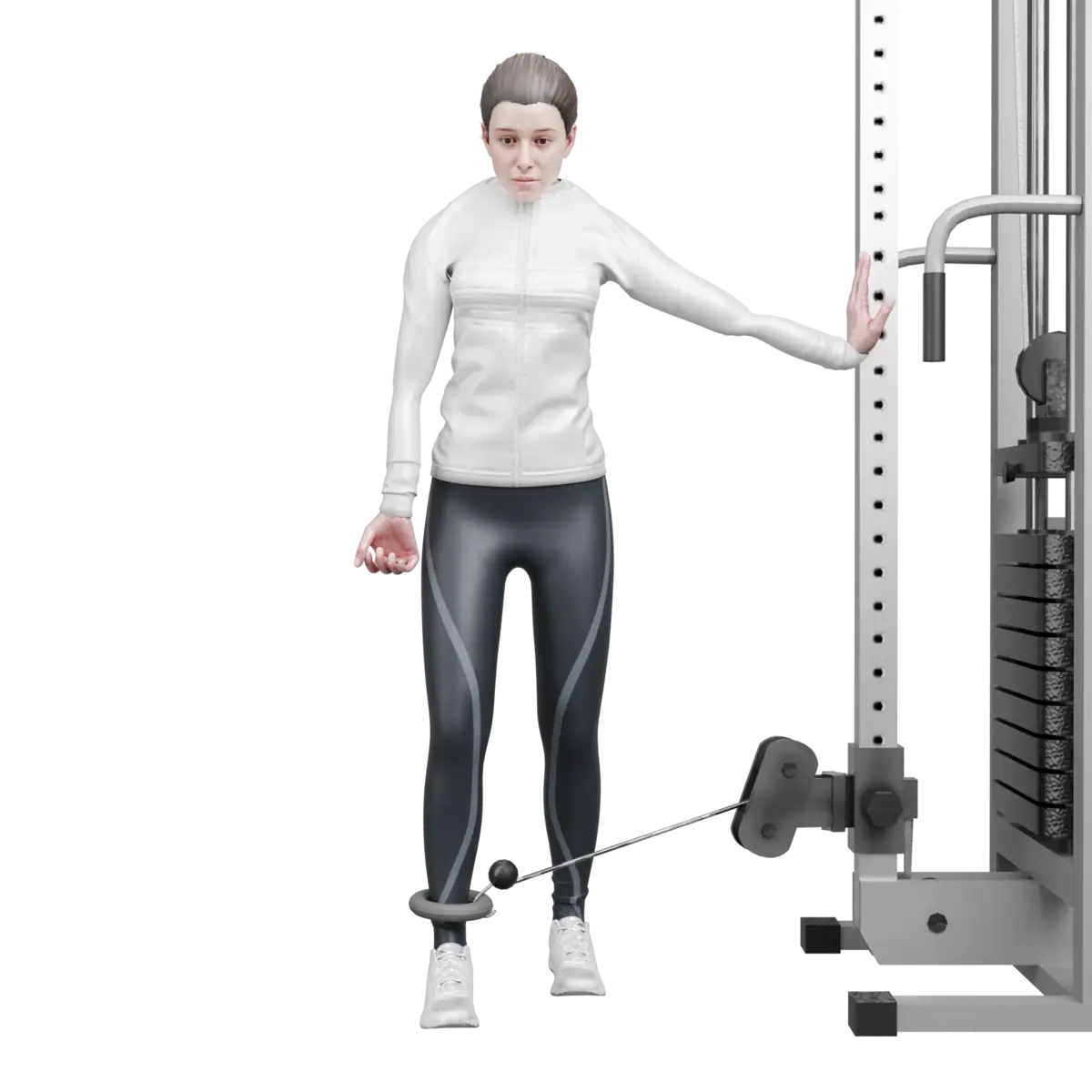
- Set the pulley to the lowest position and clip an ankle strap to it. If there is no strap, a D handle looped around the foot works.
- Stand side on to the machine and wrap the strap around the ankle of the leg farther from it. Hold the frame with your near hand.
- Step away until the cable is tight with your feet together. Stand tall, brace your core and keep the working leg straight with a soft knee.
- Lift the working leg out to the side, leading with the heel and keeping the toes pointing forward.
- Stop when the leg is out about 30 to 45 degrees, before your torso starts to lean. Pause for one second.
- Lower the leg slowly until the ankles are together again. Finish the set, then turn around and switch legs.
Common cable hip abduction mistakes
- Leaning the torso away from the leg. Stay upright. A big lean lifts the leg with your side and lower back instead of the hip.
- Turning the toes up. Keep the toes pointing forward or slightly down. Rotating out shifts the work to the front of the hip.
- Swinging the leg. Lift and lower under control and pause at the top. Use a weight you can hold there.
- Lifting too high. The hip only abducts so far. Past about 45 degrees the pelvis tips and the hip stops doing the work.
- Too much weight. This is an isolation move. Start very light and add weight only when every rep has a clear pause at the top.
Alternatives: no cable, at home, with a band
Same muscles, different equipment.
Good to know
Cable hip abduction from every angle
You stand side on to a low pulley with an ankle strap on the outer leg and lift that leg out to the side against the cable. It works the hip abductors, mainly the gluteus medius, the muscle on the side of your hip that keeps your pelvis level when you walk, run or squat on one leg. The load is light, so it fits well at the end of a lower body session after heavier lifts like the hip thrust or split squat. Below you will find how to set up the cable, how to do the movement step by step, the muscles worked and the mistakes that turn it into a hip swing.
Muscles worked
The hip abductors lift the leg out to the side and do most of the work. Of the glutes, the gluteus medius works hardest, with help from the gluteus minimus beneath it and the upper fibers of the gluteus maximus. The tensor fasciae latae on the front of the hip assists. On the standing leg the same muscles work to keep you level, and your core holds the torso still so only the leg moves.
Sets and reps for the outer hip
Do 2 to 3 sets of 12 to 20 reps per leg, one or two times a week, at the end of your lower body workout. Start with your weaker side. Rest only as long as it takes to switch legs, then about 60 seconds between rounds. Hip abductions add work for the side of the glutes, but most glute growth still comes from heavier lifts like the hip thrust, squat or split squat earlier in the session.
Cable hip abduction vs hip abduction machine
Both train the same muscles. The seated hip abduction machine pushes both legs out at once, is easy to learn and simple to load heavier. The standing cable version trains one leg at a time, makes the standing hip work to keep you level and lets you see if one side is weaker. In Curves & Confidence the machine is the main exercise and the cable version is the swap, so use whichever one your gym has.
Alternatives: no cable, at home, with a band
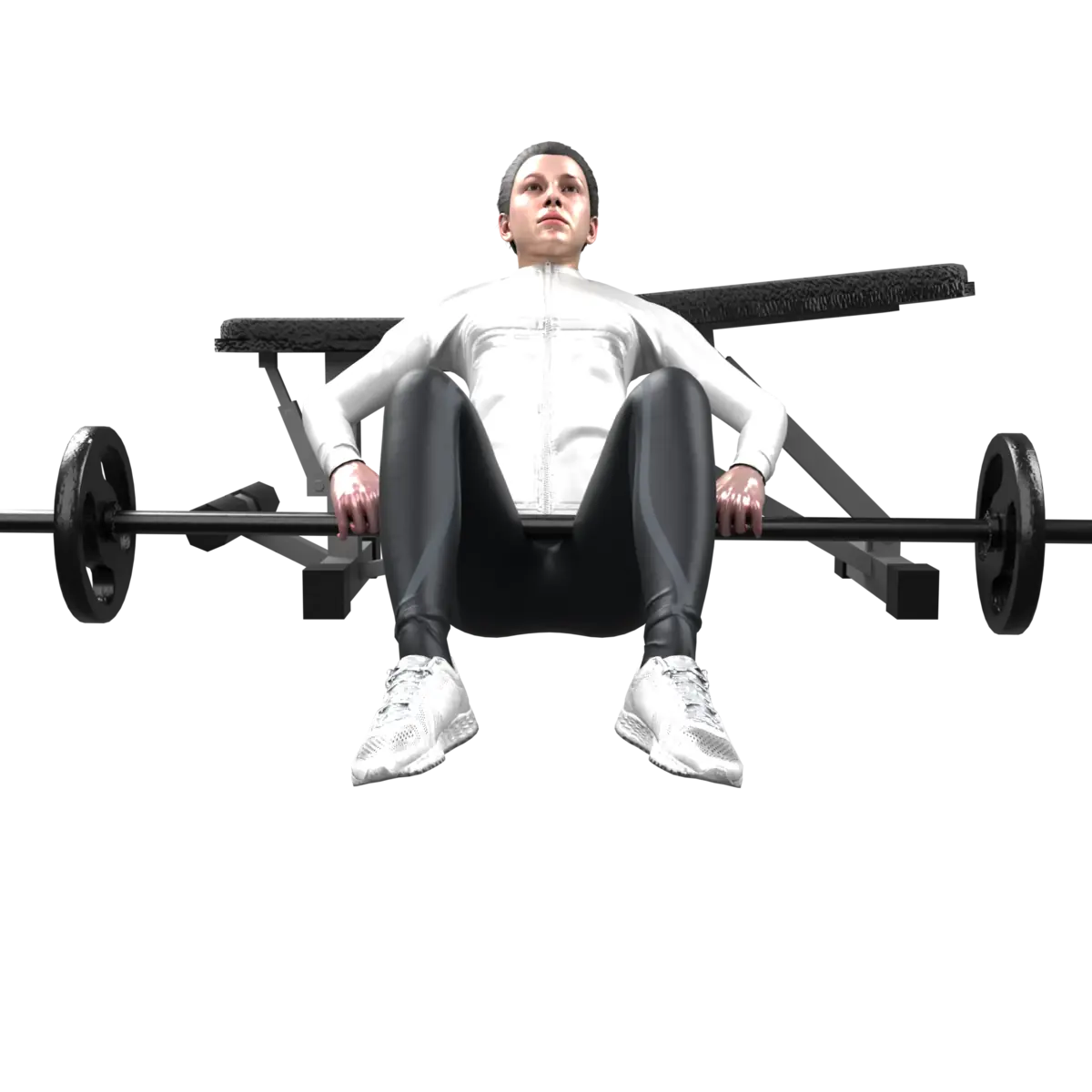
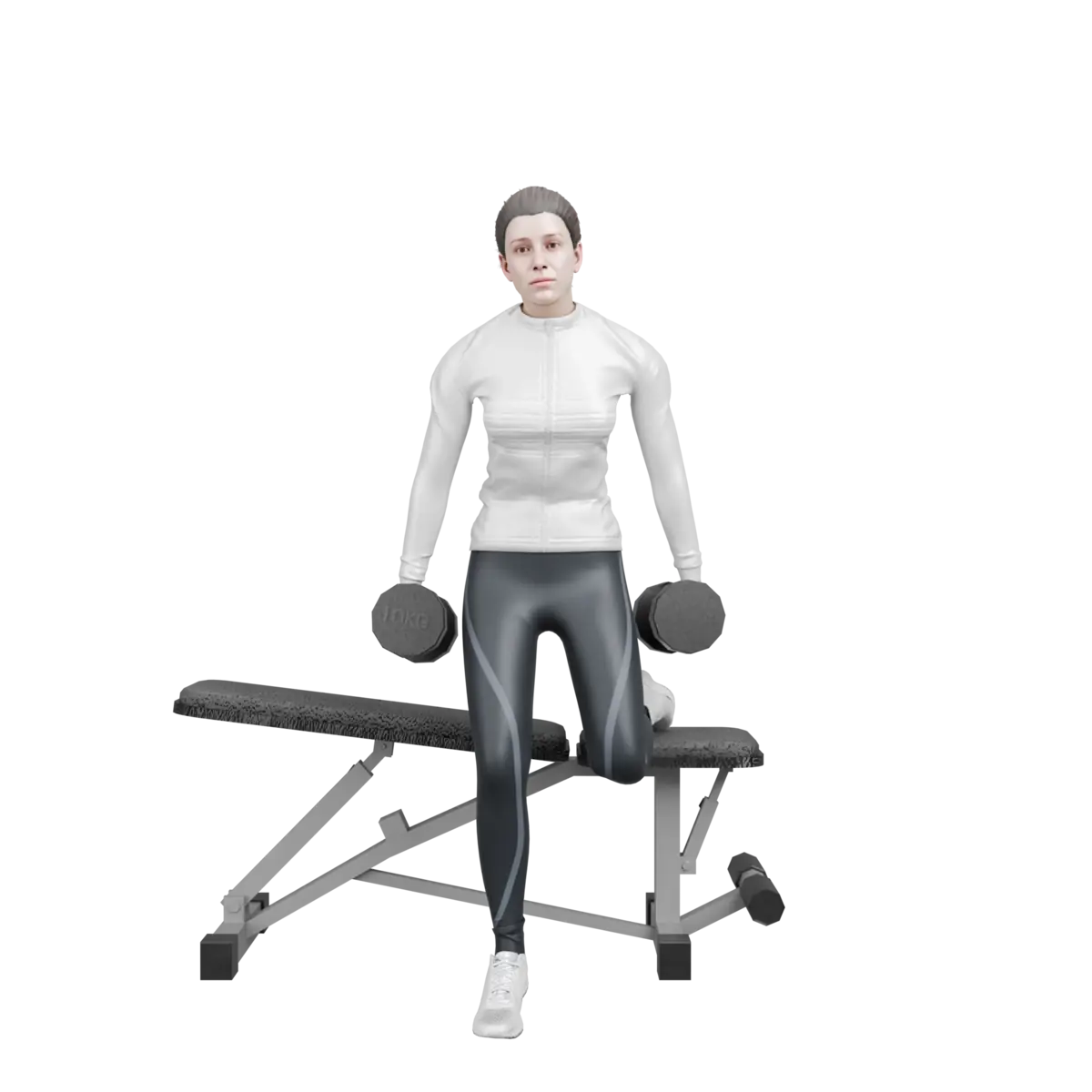
No cable machine? Loop a resistance band around both legs above the knees and do side steps or lying side leg raises on the floor. In the gym, the seated hip abduction machine trains the same muscles. The moves below build the rest of the glutes.
Plans with the cable hip abduction
The standing cable hip abduction is the swap for the hip abduction machine on Day A and Day C of Curves & Confidence. Log each leg in GymDroid and the plan sets your next weight. On iPhone and Android.
Full Body Foundation · Curves & Confidence · Dumbbell Home Essentials
What does the cable hip abduction work?
The hip abductors on the outside of the hip, mainly the gluteus medius and gluteus minimus. These are the muscles that keep your pelvis level on one leg.
Does cable hip abduction build the glutes?
It trains the side of the glutes with a light load. It works best as an addition to a heavy lift like the hip thrust or squat, not as a replacement.
Should my leg be straight or bent?
Keep it straight with a soft knee. Bending the knee shortens the lever and makes the move easier, which is fine if you are starting out.
Why do I feel it in my lower back or side?
You are probably leaning away from the working leg or lifting too high. Stand tall, brace your core and stop when the torso starts to tilt.
Can I do hip abductions without a cable machine?
Yes. A resistance band above the knees or lying side leg raises on the floor train the same muscles at home.

Plans with the cable hip abduction
The standing cable hip abduction is the swap for the hip abduction machine on Day A and Day C of Curves & Confidence.


Updated