 GymDroid
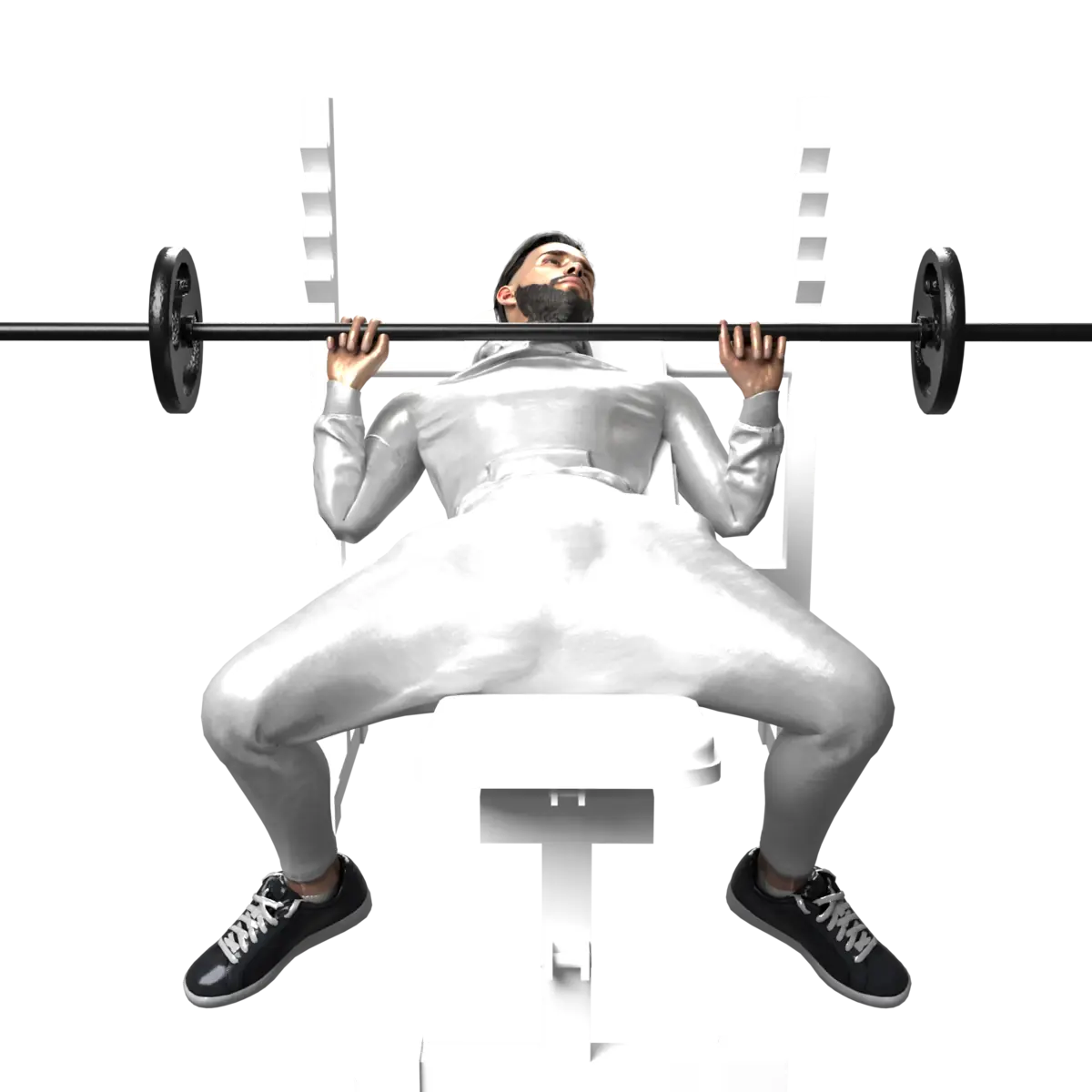
Incline bench press from every angle
Incline Bench Press: How to Do It Right
The incline bench press is the barbell press for the upper chest.
- Works
- Upper chest, Lower chest
- Also works
- Front deltoids, Triceps
How to do an incline bench press, step by step
- Set the bench to 30 to 45 degrees. Lower keeps more work on the chest, steeper brings in the shoulders.
- Lie back with your feet flat on the floor. Head, shoulders and glutes stay on the bench, with a small natural arch in the lower back.
- Grip the bar a little wider than shoulder width, thumbs around the bar, wrists stacked over your elbows.
- Pull your shoulder blades back and down into the bench and lift your chest. Unrack the bar and hold it over your upper chest with straight arms.
- Breathe in and lower the bar under control to the top of your chest, just below the collarbones. Tuck your elbows to about 45 degrees from your body.
- Touch lightly, or stop a finger width above the chest. No bounce.
- Press the bar back up in a slight arc until your arms are straight. Keep your chest lifted to meet the bar and your upper back tight.
- Follow the same bar path on every rep. After the last rep, press up and guide the bar back into the hooks.
Common incline bench press mistakes
- Bench set too steep. Above about 45 degrees the front delts take over. Stay between 30 and 45 degrees, and start at the lower end.
- Lowering the bar too low on the chest. On an incline the bar belongs just below the collarbones. Lower to the middle of the chest and your elbows flare and the shoulders do the work.
- Elbows flared straight out. Keep them about 45 degrees from your body with your wrists over your elbows. Easier on the shoulders and stronger.
- Shoulders rolling forward at the top. Keep the shoulder blades pinned back and down for the whole set, even when your arms are straight.
- Hips lifting off the bench. Drive your feet into the floor, not up. If your hips still rise, the weight is too heavy.
- Benching heavy alone with no safeties. Set the rack safety arms just below chest height or ask for a spot before the first set.
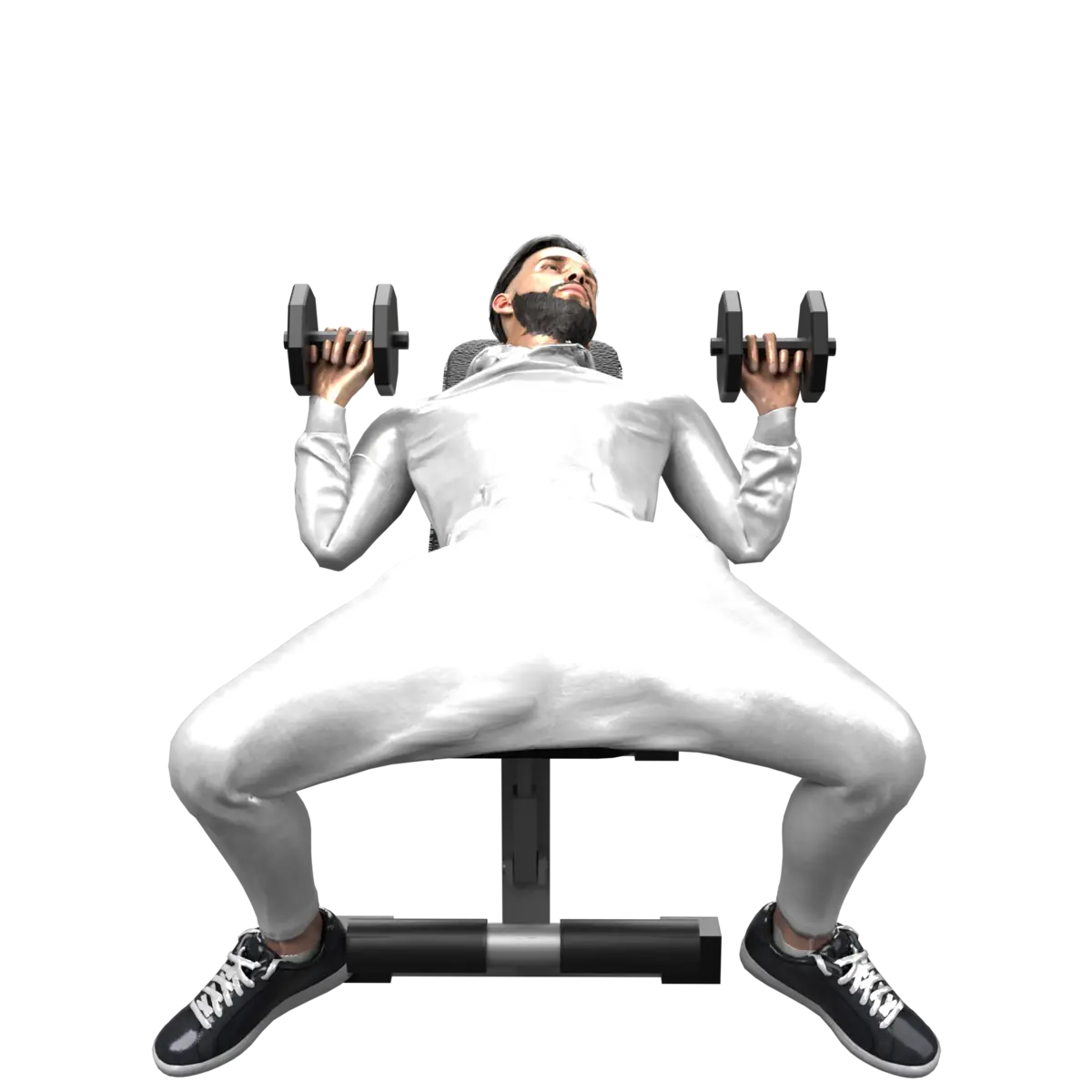
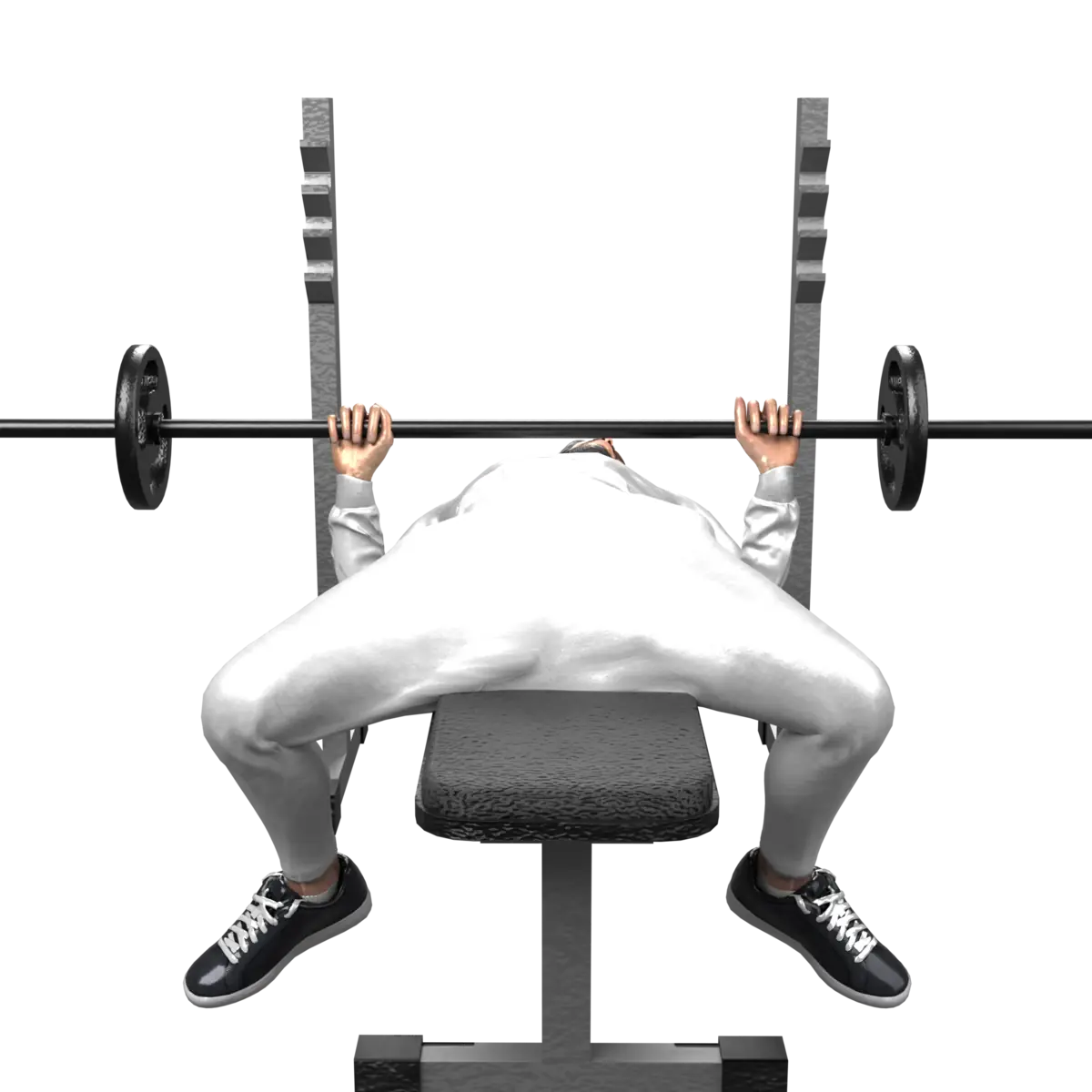
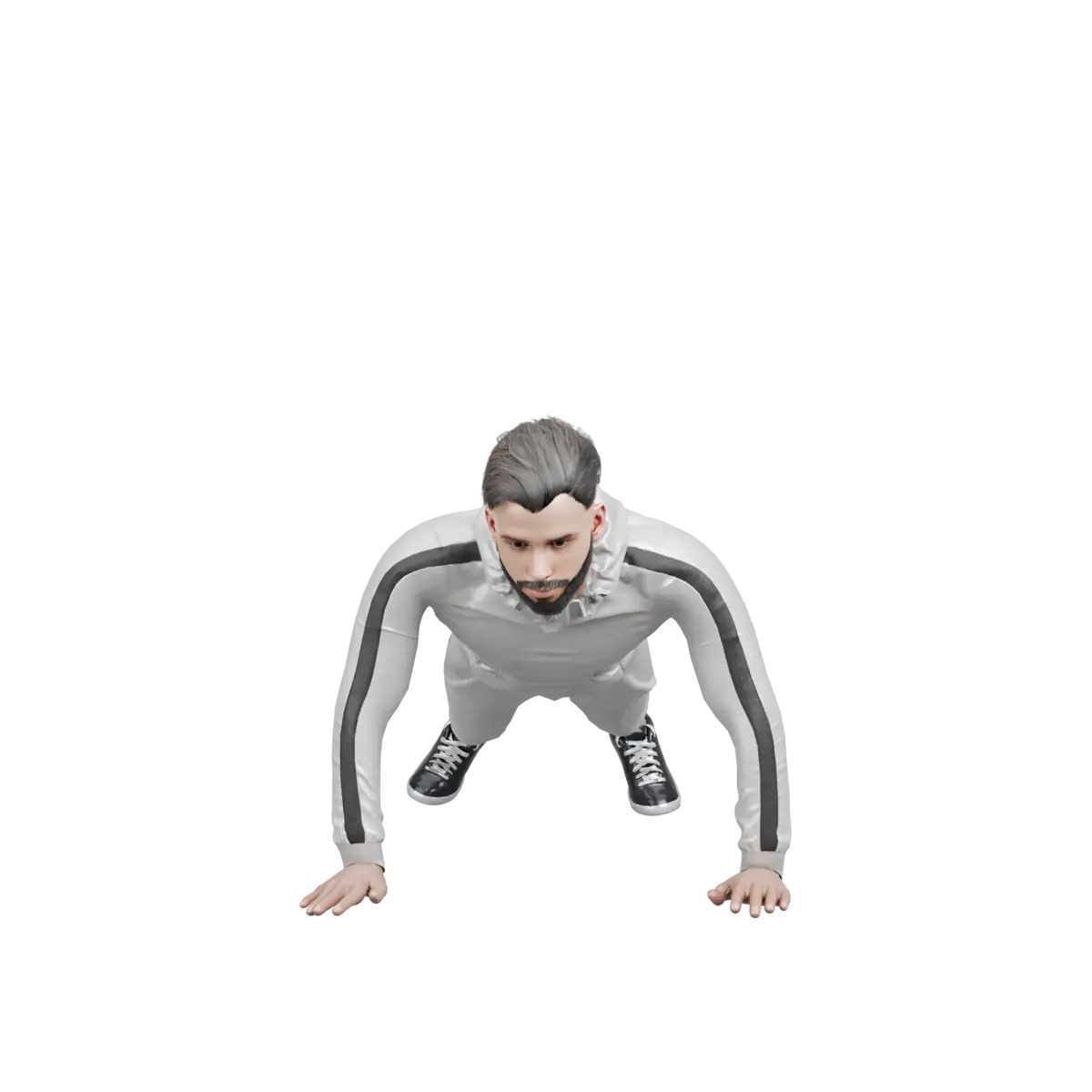
Alternatives: dumbbells, machine, at home
Same muscles, different equipment.
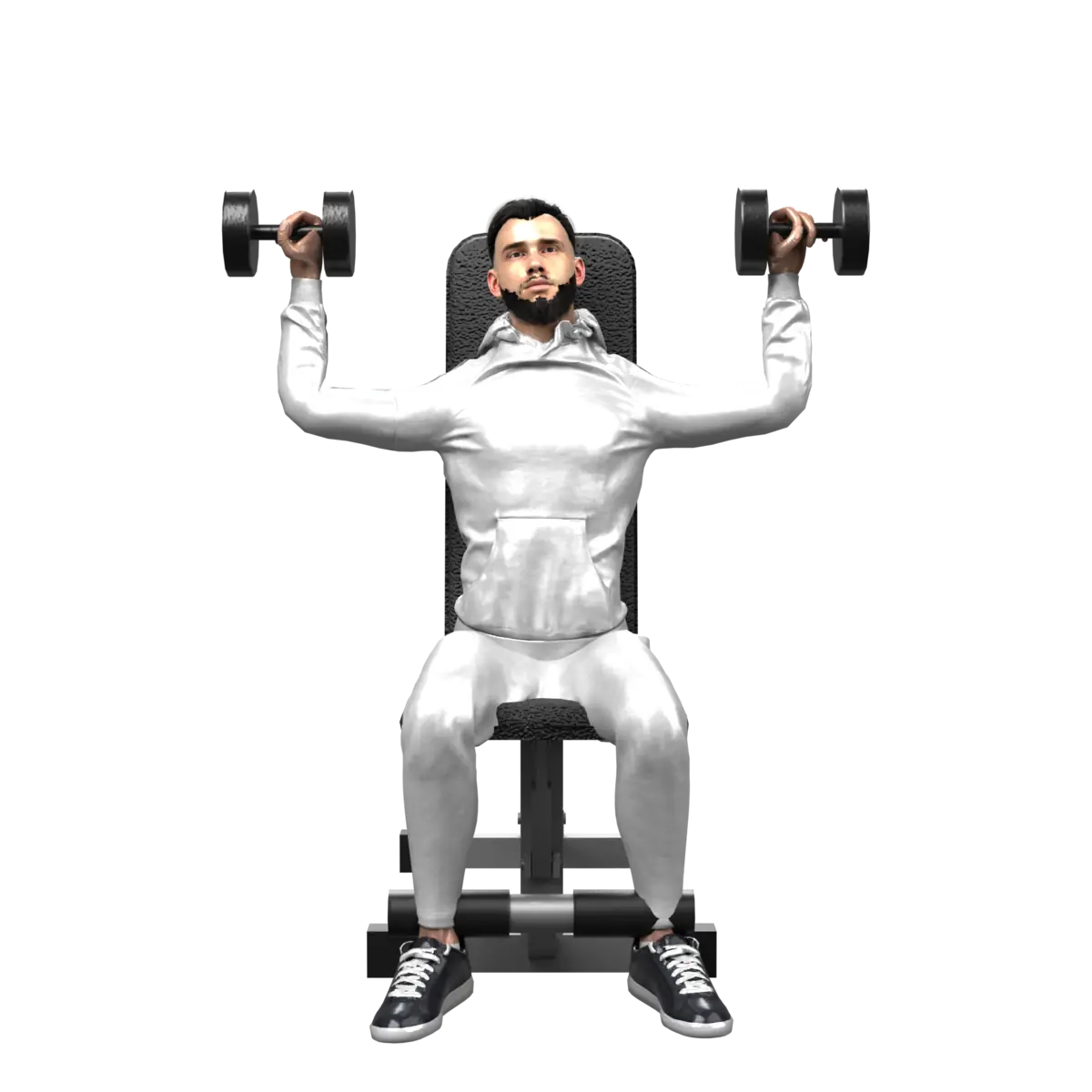
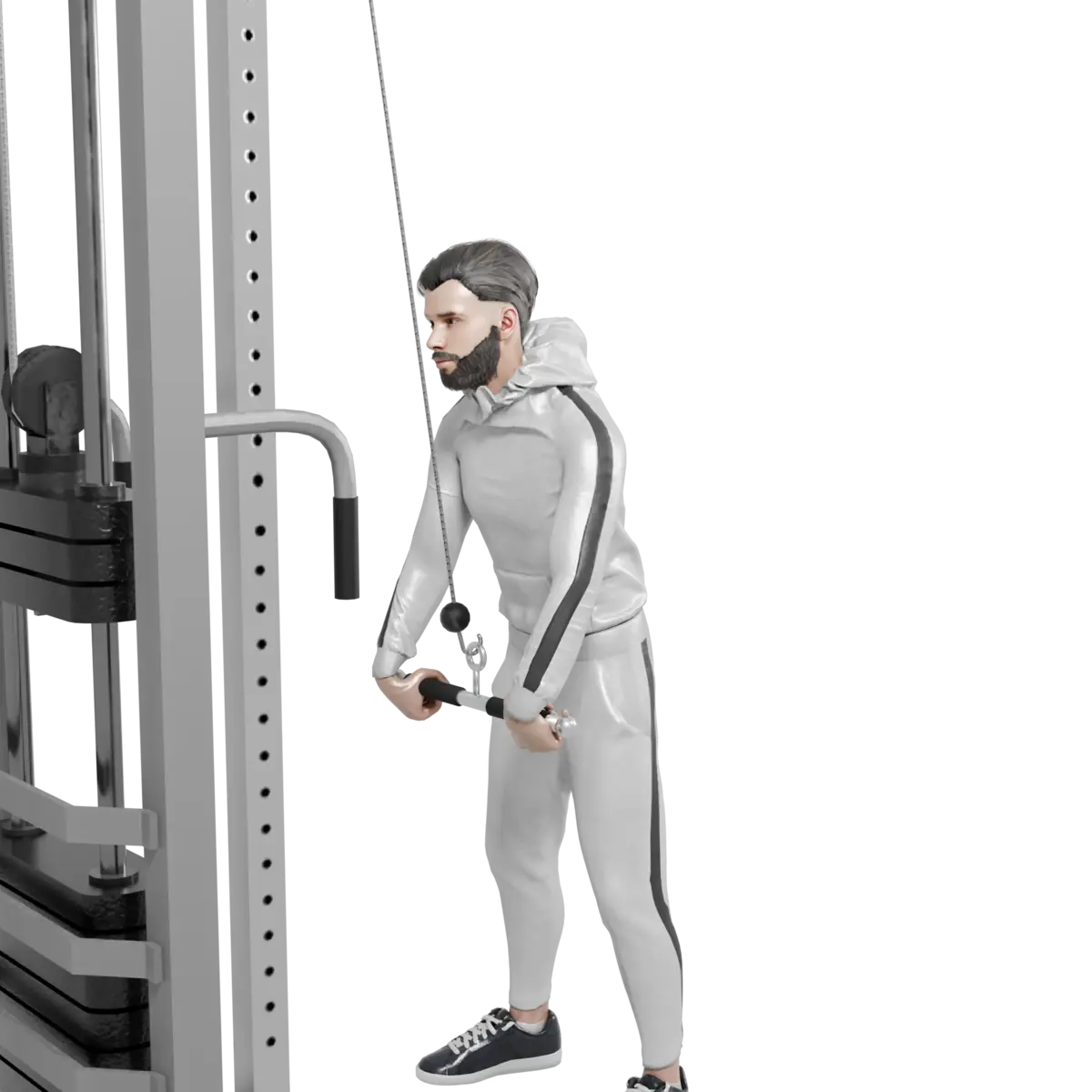
Good to know
Incline bench press from every angle
You lie on a bench set to 30 to 45 degrees, lower the bar to the top of your chest and press it back up to straight arms. The angle shifts more of the work to the upper part of the chest and the front shoulders, the parts a flat bench reaches least. Below you will find the right bench angle, grip and bar path step by step, the muscles worked, how it compares to the flat bench, and the mistakes that turn it into a shoulder press.
Muscles worked
The incline bench press works the pectoralis major, the big chest muscle. The incline puts more of the load on its upper part, the fibers that run from the collarbone, but the lower part still presses too. The front deltoids help more than on a flat bench, and the triceps straighten your arms at the top. Your upper back holds the shoulder blades in place, so a tight back makes for a stronger press.
Sets and reps for upper chest growth
For muscle growth, do 3 to 4 sets of 6 to 10 reps with 2 minutes of rest. For strength, 4 sets of 4 to 6 reps after two or three warm up sets. Stop each set with 1 or 2 good reps left and add 1 to 2.5 kg once you hit the top of your rep range on every set. Put the incline bench press first on a chest day if your upper chest lags, or after the flat bench press if you want a heavier main lift.
Incline bench press vs flat bench press
The flat bench press lets you lift more and trains the whole chest. The incline bench press puts more of the work on the upper chest and the front shoulders, so expect to press about 20 to 30 percent less. Neither one replaces the other. Most good chest plans use both: the flat bench as the heavy main lift and the incline press as the second press, or the other way round when the upper chest is the priority. Do not compare the two numbers directly.
What angle should an incline bench press be?
Most people feel the upper chest best around 30 degrees. At 45 degrees the front delts take more of the load, and above that it becomes a shoulder press. If the incline bench in your gym has fixed settings, pick the lowest one above flat. Try a few sets at each angle and keep the one where you feel the chest working most, not the shoulders.
Alternatives: dumbbells, machine, at home
No incline rack free? The incline dumbbell press trains the same muscles with a longer range and each arm on its own. An incline chest press machine is easy to learn and safe without a spotter. At home, push ups with your feet raised on a step or a couch shift the work to the upper chest. The moves below cover the chest, front delts and triceps from other angles.
Plans with the incline bench press
The incline bench press is the first lift on Day C of Full Body Foundation, a 3 day gym plan, with the incline dumbbell press as its swap. You can also add it to any chest or push day in GymDroid. Log every set and the plan sets your next weight. On iPhone and Android.
Full Body Foundation · Curves & Confidence · Dumbbell Home Essentials
What angle should the bench be for incline bench press?
Between 30 and 45 degrees. Around 30 degrees keeps the most work on the upper chest. Steeper than 45 degrees moves the load to the front shoulders.
What muscles does the incline bench press work?
Mainly the chest, with more of the work on the upper part than a flat bench gives. The front deltoids and triceps help press the bar up.
Is incline bench press harder than flat?
Yes. Most people press about 20 to 30 percent less on an incline, because the front shoulders do more and the chest is in a weaker position. That is normal, not a sign of bad form.
Where should the bar touch on incline bench press?
Just below the collarbones, at the top of the chest. Lower than that and the elbows flare out and the shoulders take over.
Is incline bench press better than flat bench for chest?
For the upper chest, yes. For total chest size and strength, the flat bench wins because you can load it heavier. Most people do both in the same week.
Incline barbell or incline dumbbell press?
The barbell lets you lift more and is easier to load in small steps. Dumbbells give a longer range and let each arm work on its own. Both build the upper chest, so pick the one that feels best on your shoulders, or alternate them.

Plans with the incline bench press
The incline bench press is the first lift on Day C of Full Body Foundation, a 3 day gym plan, with the incline dumbbell press as its swap.


Updated